
You can buy an enterprise software license and still watch your pipeline stall completely. Many founders and sales leaders invest in Salesforce expecting steady outbound growth. Instead, they end up paying for complex features that reps avoid using every day. Software seats cannot fix weak targeting, outdated email addresses, or low outreach volume. In simple terms, a Salesforce Alternative is any CRM platform an organization chooses instead of Salesforce to manage contact data, sales pipelines, and customer support. These competing tools usually offer straightforward features, faster onboarding, and flexible pricing tiers designed for smaller teams and realistic budgets.
A Salesforce alternative is any customer relationship management platform that an organization chooses instead of Salesforce to organize contact data, manage sales pipelines, and handle customer support. Selecting the right alternative matters because it cuts software bloat, lowers onboarding friction, and frees up revenue teams to focus on actual outbound execution.
When sales reps spend their working hours clicking through administrative menus, they lose time meant for talking to buyers. Evaluating practical salesforce crm alternatives helps teams find tools that fit their day-to-day workflow.
A salesforce alternative gives you pipeline tracking, lead automation, and sales communication without heavy setup fees, rigid multi-year contracts, or administrative clutter.
Growth teams frequently pair these platforms with direct, verified B2B contact lists from Go4Database to fuel customer discovery and run targeted sales campaigns without extra technical overhead.
What Are the Best Salesforce Alternatives in 2027
The modern sales landscape requires lean tools rather than heavy systems. The following subsections examine why modern teams move away from enterprise bloat and break down the hidden costs behind legacy software.
Framing the Shift from Enterprise Bloat to Outbound Agility
Sales reps need tools that help them talk to buyers, not systems that demand endless administrative upkeep. For growing teams, heavy enterprise software often slows outbound momentum instead of supporting it.
Instead of calling prospects, reps spend hours updating mandatory fields. That administrative friction quietly eats away at selling time across a busy week.
The cost difference is real. Research from Nucleus Research found that companies switching from Salesforce to agile, lower-code platforms cut recurring software spend by an average of 37 percent.
Those same teams also reported a 70 percent reduction in deployment timelines. That saved budget can go directly toward outbound prospecting rather than software upkeep.
Complexity also creates an adoption problem. The SF Ben Annual Ecosystem Survey found that over 53 percent of surveyed Salesforce professionals feel the platform has grown increasingly complex to manage.
When technical administrators struggle with day-to-day maintenance, sales reps simply stop logging their activity. An abandoned database usually follows shortly after.
The Hidden Costs of Legacy Software
The actual cost of software rarely stops at the monthly seat price. Salesforce often requires outside consultants, third-party connectors, and dedicated administrators just to handle basic lead routing and reporting dashboards.
Those extra operational costs create real friction for lean teams. When reps need to import prospect records and run outreach, waiting on IT tickets just to update a deal slows everything down.
Looking at what is Salesforce shows why its setup can easily overwhelm a small team. The practical goal is finding enough capability to sell without paying for complexity you never use.
TL;DR:
The best salesforce alternative for a lean team cuts unnecessary administrative bloat while lowering software overhead by up to 37 percent. Pairing an agile CRM with verified prospect records from Go4Database ensures your sales reps spend their working hours closing deals rather than managing software tickets.
Salesforce Alternatives Compared: Features, Pricing, and Integrations
Evaluating a sales force alternative requires looking at day-to-day usability, technical email rules, and storage ceilings. In practice, the top ten platforms handle those operational constraints quite differently.
Salesforce Sales Cloud
Salesforce Sales Cloud's homepage as of October 2026.
Salesforce Sales Cloud remains the common benchmark for enterprise teams. It offers deep customization, detailed reporting, and broad integration options, especially for teams managing hundreds of reps across multiple global territories.
According to the Salesforce Pricing Page (October, Starter Suite costs $25 per user per month. Moving to Pro Suite quadruples that base price to $100 per user per month billed annually.
Full custom web API access and advanced integrations require Enterprise ($175 per user per month) or Unlimited ($350 per user per month) tiers. Standard storage averages 10 GB per organization, which often triggers add-on fees for large prospect databases.
Best for: Large enterprise companies with dedicated in-house technical administrators and complex global reporting hierarchies.
HubSpot Sales Hub
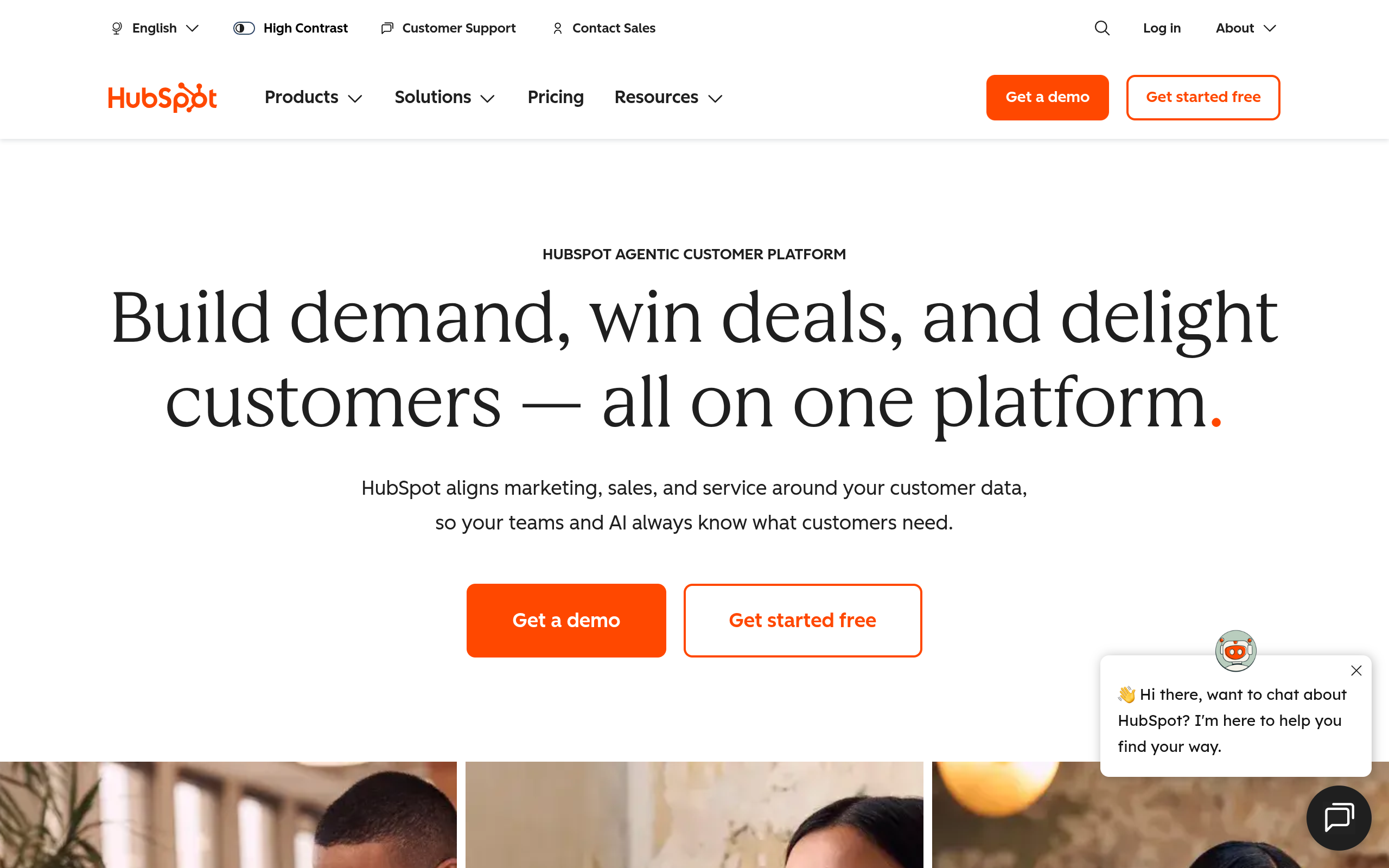
HubSpot Sales Hub's homepage as of October 2026.
HubSpot Sales Hub connects deal pipelines directly to inbound website traffic and content. Reps get clear tracking tools that show when prospects open emails or view shared proposals.
According to the HubSpot Sales Hub Pricing Page (October 2026), the Professional tier costs $90 per seat per month billed annually. It requires a mandatory five-seat minimum ($450 per month base) alongside required onboarding fees.
Under the HubSpot Acceptable Use Policy, accounts cannot import or email third-party or scraped contact lists through its marketing tools. Violating these terms can prompt sudden deliverability suspensions.
Best for: Marketing-led sales teams managing warm, opted-in website leads.
Pro tip: Keep your cold prospecting database in a separate outreach sequencer or validation tool so you avoid triggering marketing CRM list-import audits.
Zoho CRM
Zoho CRM offers flexible sales automation without enterprise pricing. It works well as an alternative to salesforce for small business teams that need custom fields and automated rules on a predictable budget.
Based on the Zoho CRM Pricing Page, paid plans start at $14 per user per month billed annually. The company also offers a free plan supporting up to three users.
One trade-off is storage, which begins at 1 GB per organization before requiring paid expansions. The interface can also feel fragmented across different Zoho applications during heavy daily use.
Best for: Budget-conscious teams that require custom workflow automation without enterprise license costs.
Feed Your New CRM with Verified Leads
Fuel your sales platform with accurate Go4Database B2B contact records to keep reps selling immediately.
Pipedrive
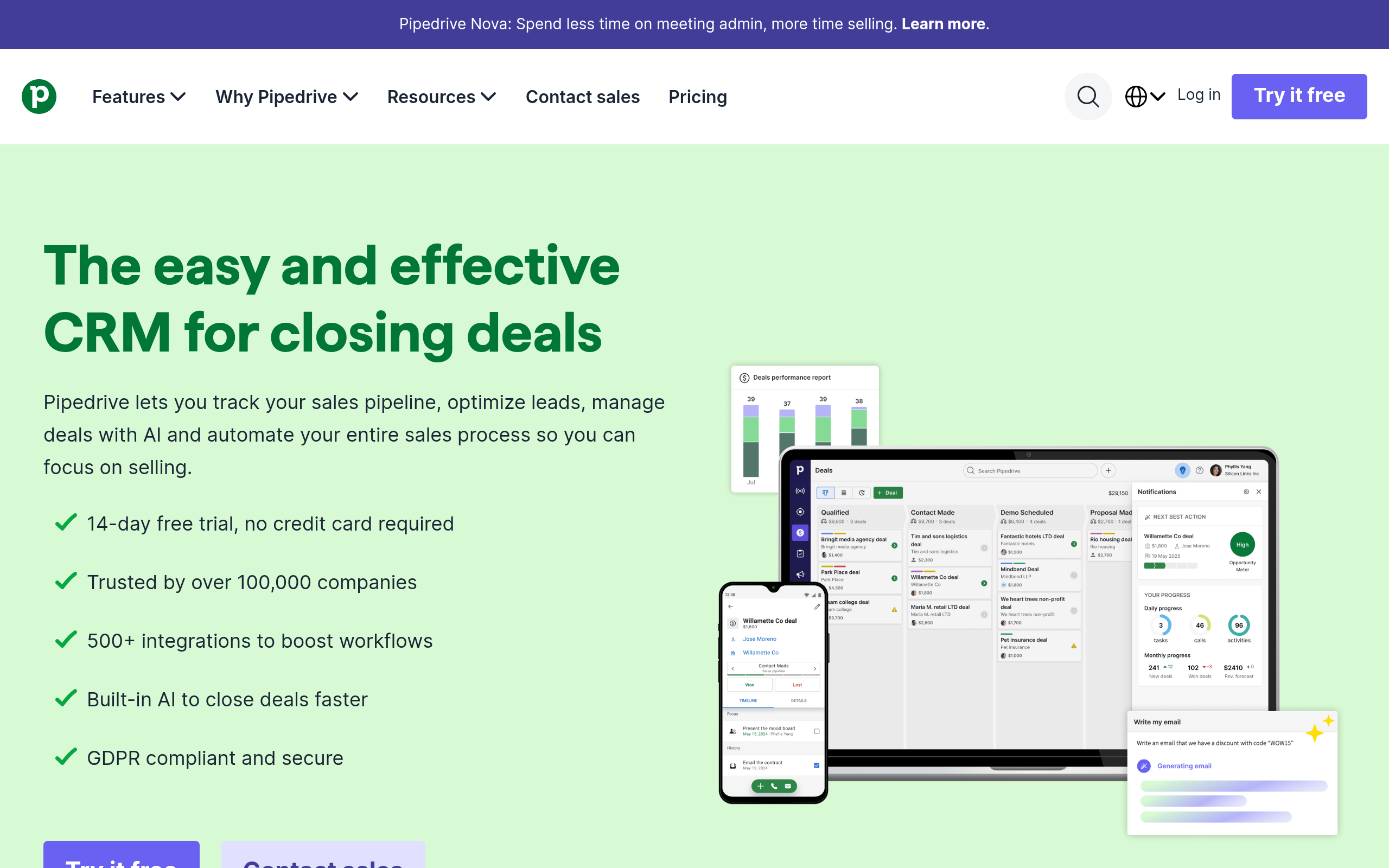
Pipedrive's homepage as of October 2026.
Pipedrive focuses heavily on visual deal stages and daily sales activities. The platform guides reps through scheduled follow-ups and keeps active pipelines straightforward to track.
According to the Pipedrive Pricing Page, the entry-level Essential plan starts at $14 per user per month billed annually. Most teams can adopt it with minimal onboarding.
There is also a data limit to watch. Pipedrive documentation notes a company-wide usage ceiling of 300,000 total open leads and deals. High-volume outbound teams importing very large prospect lists may run into these system barriers.
Best for: Deal-focused sales reps managing warm sales pipelines with clear visual milestones.
Close CRM
Close CRM builds calling, SMS messaging, and multi-channel email cadences directly into the platform. It eliminates the need for separate calling plugins or external sequencing software.
Based on the Close Pricing Page (October, the Growth plan costs $99 per user per month. That tier includes native calling and cadences, with carrier telecom minutes billed at cost.
The tool focuses on fast outbound communication rather than post-sale customer onboarding. Small teams moving from basic spreadsheets will certainly notice the higher starting price point.
Best for: Outbound inside sales teams running daily calling and direct email prospecting.
Freshsales
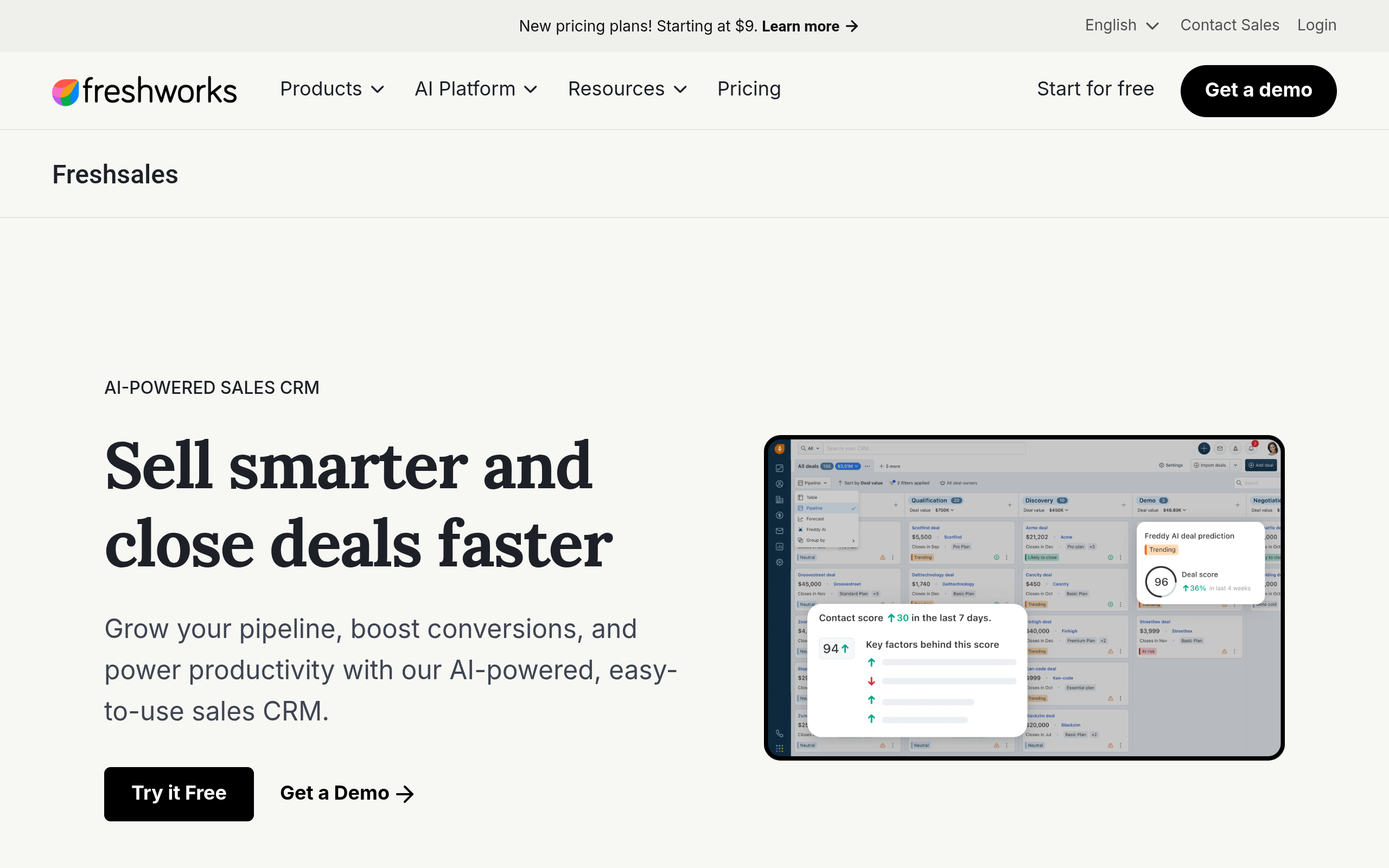
Freshsales's homepage as of October 2026.
Freshsales combines deal management with built-in telephony and contact scoring. That helps reps spot engaged leads while keeping customer conversations organized across multiple channels.
According to the Freshsales Pricing Page, the Growth plan starts at $9 per user per month billed annually. A three-user free plan is also available for smaller teams.
The trade-off comes with scale. The Pro plan caps contact storage at 100,000 records before requiring add-on purchases, while automated AI credits stay tied to higher tier commitments.
Best for: Lean businesses seeking integrated telephony and lead scoring at a modest price.
Monday Sales CRM
Monday Sales CRM uses customizable board views to track incoming leads and post-sale handoffs. That structure makes it easier to connect closed deals directly with customer onboarding projects.
According to the Monday.com Pricing Page, plans start at $12 per seat per month on Basic tiers. However, there is a mandatory three-seat minimum to factor in.
Lower tiers come with clear boundaries. Standard plans cap automated board actions at 250 runs each month, and teams needing native outbound phone dialing must integrate external calling software.
Best for: Cross-functional teams that manage customer onboarding alongside sales deals.
Apollo.io
Apollo.io combines a B2B contact search engine with outbound sales sequencing tools. It lets sales reps source prospect records and enroll them directly into multi-step email cadences.
Based on the Apollo.io Pricing Page, the Basic tier starts at $49 per seat per month billed annually. The Organization plan costs $119 per seat per month with a three-seat minimum.
Contact storage is flexible, but export credits and direct mobile lookups are metered strictly. For team planning, see our breakdown of Apollo pricing or compare relevant Apollo.io alternatives.
Best for: Outbound prospectors who want prospecting data credits and email sequencing housed inside a single tool.
Brevo
Brevo focuses on multi-channel messaging across transactional email, SMS, and basic sales pipelines. It provides reliable email delivery infrastructure alongside straightforward contact management tools.
Sales Essentials starts at $31 per month for up to five users, alongside a functional free plan. It also offers generous contact storage for standard CRM records.
Brevo marketing tools restrict third-party email lists under strict usage terms. The pipeline tracking tools are also simpler than what dedicated sales platforms provide.
Best for: Small companies managing a blend of transactional alerts, newsletters, and simple sales deals.
Microsoft Dynamics 365 Sales
Microsoft Dynamics 365 Sales connects directly with Microsoft Teams, Outlook, and Azure enterprise environments. It serves large organizations that require strict enterprise compliance frameworks.
Sales Professional starts at $65 per user per month, while Enterprise reaches $105 per user per month. The platform includes Copilot AI sales tools and Power BI reporting.
Custom deal flows require serious technical setup. Dataverse storage capacity can also trigger additional monthly infrastructure fees.
Best for: Mid-market and enterprise organizations committed to Microsoft software.
SugarCRM
SugarCRM focuses on flexible pipeline tracking with predictable licensing. For mid-market teams that want clear budgeting, that pricing stability is a genuine advantage.
Base plans include 60 GB of database storage, which easily accommodates larger contact volumes. The system also handles detailed approval rules and routine lead routing smoothly.
Sugar Sell Essentials begins at $49 per user per month, though upper tiers require a fifteen-seat commitment. Keep in mind that standalone marketing modules prohibit imported third-party lists.
Best for: Established companies wanting an enterprise-grade platform without unexpected renewal hikes.
Scale Pipeline Volume Without Record Limits
Pair your software choice with Go4Database to access verified decision maker details without paying high platform markups.
CRM Comparison Matrix
| Platform | Starting Price (Billed Annually) | Storage / Contact Limits | External List Ingestion | Best Value Scenario |
|---|---|---|---|---|
| Salesforce Sales Cloud | $25/user/mo (Starter); $100/user/mo (Pro) | 10 GB base org storage; costly add-on tiers | Supported; full API sync gated behind $175/mo tier | Large enterprises needing deep customization |
| HubSpot Sales Hub | $15/seat/mo (Starter); $90/seat/mo (Pro, min 5 seats) | Up to 1M basic contacts; marketing tiers escalate | Records allowed; cold marketing sends prohibited | Inbound marketing teams with active web traffic |
| Zoho CRM | $14/user/mo (Standard); Free for up to 3 users | 1 GB org storage base; extra blocks available | CSV import supported; mass sends require opt-in | Cost-conscious teams needing enterprise rules |
| Pipedrive | $14/user/mo (Essential); $29/user/mo (Advanced) | Strict ceiling of 300,000 total leads and deals | Allowed via CSV; Campaigns module bans cold lists | Visual reps managing warm deal pipelines |
| Close CRM | $9/user/mo (Solo); $99/user/mo (Growth) | Generous capacity; metered raw telecom fees | Supported for direct cold outreach sequences | Outbound sales teams running phone and email cadences |
| Freshsales | $9/user/mo (Growth); Free for up to 3 users | 100,000 contacts on Pro ($39/mo) before add-ons | Supported via CSV; sends route through user mailboxes | Small teams needing built-in phone dialing and AI scoring |
| Monday Sales CRM | $12/seat/mo (Basic, min 3 seats); $17/seat/mo (Standard) | 5 GB to 100 GB based on plan; strict action limits | Supported via CSV; emails route via Outlook/Gmail | Teams connecting sales deals to project handoffs |
| Apollo.io | $49/seat/mo (Basic); $119/seat/mo (Org, min 3 seats) | Unlimited records; export and mobile credits metered | Supported; permits external CSV list enrichment | Solo prospectors wanting built-in search data |
| Brevo | $31/mo for 5 users (Essentials); Free tier available | Unlimited CRM contacts; marketing send limits vary | Allowed for CRM data; bulk marketing requires opt-in | Small teams managing deals and transactional emails |
| Microsoft Dynamics 365 | $65/user/mo (Professional); $105/user/mo (Enterprise) | 10 GB Dataverse base + per-seat storage | Supported via CSV; compliance configured manually | Organizations standardized on Microsoft 365 |
| SugarCRM | $49/user/mo (Essentials); Upper plans require 15 seats | 60 GB org database storage included | Allowed for sales reps; Sugar Market bans bought data | Mid-market firms wanting transparent pricing |
Best Affordable Salesforce Competitors for Small Businesses and Startups
Early stage teams need straightforward software that protects their runway. Below, we look at avoiding steep pricing jumps and deciding when free tiers beat paid outbound setups.
Escaping the Small Business Pricing Cliff
Smaller teams often run into trouble with enterprise pricing models. Salesforce, for example, requires an upgrade from Starter to Pro simply to unlock basic custom validation rules.
That single upgrade increases monthly licensing costs fourfold. For a team with five reps, annual software expenses escalate quickly without delivering four times the pipeline value.
Choosing practical The two platformss for small business teams avoids this trap. Platforms like Zoho CRM, Freshsales, and Pipedrive offer deal pipelines, activity alerts, and contact records for under $20 per seat each month.
Teams reviewing outreach workflows can also look at Saleshandy alternatives. Simpler tools help reps spend more time prospecting and less time managing complex software tickets.
These lower-cost options leave budget for work that directly generates pipeline. Instead of paying thousands of dollars for idle software seats, you can fund targeted prospect discovery.
When to Use Free Plans vs Upgraded Outbound Stacks
Evaluating The two platformss free of charge can help early-stage ventures. Free plans from Zoho CRM, Freshsales, or Brevo work well when you only need to log customer conversations and track a few referral deals.
These free tiers struggle once you launch proactive outreach. They enforce strict caps on automated workflow actions, limit database size, and restrict email integrations.
Upgrading to an entry-level paid CRM removes those administrative limits without inflating overhead. A balanced setup keeps operating costs predictable as your sales team expands.
For prospecting data, Go4Database pricing includes a Free Trial offering 100 verified contacts per month for a full year with no card required.
For expanding teams, the Micro Active plan provides 3,000 verified contacts across 10 users for $59 per month. You can also review ZoomInfo pricing to see how legacy data contracts compare.
TL;DR:
Small business sales teams can avoid the steep Salesforce pricing cliff by adopting tools like Zoho CRM or Freshsales for under $20 per seat. Coupling affordable CRM licenses with targeted decision-maker data creates an effective, budget-friendly prospecting engine.
Salesforce vs Other CRM Software: Which Platform Offers the Best Value
Value depends on how your team sells and stores data. These subsections explore deliverability challenges, storage limits, and real scenarios to show where each platform fits best.
The Inbound Bias Trap and Technical Deliverability Realities
Industry roundups often label HubSpot as the best the two platforms without noting its outbound restrictions. HubSpot prohibits emailing third-party or purchased lists through its marketing tools.
If your growth plan relies on direct prospecting, that single policy stops campaigns before they begin. Knowing how your platform handles external lists prevents expensive surprises.
Mailbox providers also enforce strict technical deliverability standards. According to Google and Yahoo email sender guidelines, senders must keep spam complaint rates below 0.10% and avoid exceeding 0.30%.
Blasting unverified third-party lists from a shared marketing server risks immediate domain blacklisting. For inbound email setups, you can evaluate Mailchimp pricing and Mailchimp alternatives.
Outbound teams succeed by sending direct messages through individual mailboxes under CAN-SPAM compliance rules. That requires authenticating each domain with SPF, DKIM, and DMARC.
SPF confirms authorized sending servers, DKIM adds an encrypted signature, and DMARC dictates how receivers handle unverified mail. These protocols protect your domain health during active outreach.
Pro tip: Always verify external email records with a dedicated validation tool before importing them into your CRM to keep bounce rates under two percent.
Storage Caps and Total Cost Scenarios
Storage caps are another hidden expense, particularly if you manage broad market lists. Enterprise CRMs often charge steep add-on fees once your saved contacts exceed basic database limits.
Storing 100,000 inactive prospects inside Salesforce can cost thousands of dollars each year in storage upgrades alone. That expense rarely translates into closed revenue.
Efficient sales teams solve this by storing master prospect lists outside their primary CRM. They validate records first, importing only active deals and engaged leads into the pipeline.
You can review ZoomInfo alternatives and Cognism alternatives to see how teams handle data sourcing. Keeping your CRM lean keeps software costs under control.
Scenario-Based Selection: When Each Tool Fits
If you run high-velocity cold outbound sales, Close CRM or Apollo.io generally fits best. Both platforms connect directly to authenticated Google Workspace or Microsoft 365 mailboxes for outreach cadences while logging phone calls.
For multi-department inbound and service tracking, HubSpot Sales Hub or Zoho CRM works well. These tools handle web-form capture, inbound lead assignment, and support ticketing for prospects who have already opted in.
Maximize Sales Value with Accurate Prospect Lists
Lower customer acquisition costs by sourcing verified direct B2B intelligence from Go4Database.
How to Choose the Best Salesforce Alternative for Your Sales Team
Buying software before auditing your sales process often creates friction. The next subsections guide you through evaluating your pipeline needs and getting verified B2B intelligence for your outreach.
Diagnosing Your Sales Engine Before Purchasing Software
Switching software vendors will not solve fundamental sales problems. Before signing a CRM contract, examine your outbound foundation across four distinct operational areas:
- Targeting and ICP Clarity: Are your sales reps reaching verified decision-makers who actually experience the problem you solve?
- Data Accuracy: Are your prospect email addresses bouncing, or are your phone numbers disconnected?
- Message Relevance: Does your outreach pitch solve a specific commercial pain point, or does it deliver generic feature descriptions?
- Follow-Up Cadence: Are reps executing structured follow-ups across email, LinkedIn, and phone channels?
If your prospect records are outdated, even the most expensive CRM cannot build pipeline on its own. Teams looking for reliable contact data often evaluate Lusha pricing or research Lusha alternatives to improve accuracy.
Sourcing Verified B2B Intelligence Instead of Manual Scraping
Manual web scraping burns valuable sales hours and leaves reps with incomplete records. Outdated contact information also damages domain reputation and lowers sales team morale.
Checking platforms like RocketReach pricing and RocketReach alternatives shows how quickly data costs add up. Reliable prospect sourcing helps your reps focus on actual selling.
According to Go4Database's site, Go4Database lists over 400 million global business contacts and 130 million verified mobile numbers. That includes 845 B2B industry categories, covering specialized segments like alternative medicine clinics.
You can also review options like Hunter pricing and Hunter alternatives for email discovery. Having accurate records ready keeps outbound campaigns running on schedule.
Feeding clean records directly into an affordable CRM allows reps to focus on pitching, following up, and closing deals. Decoupling data sourcing from your CRM infrastructure protects your budget without sacrificing pipeline growth.
TL;DR:
Software alone will not generate sales if your prospect data is inaccurate. Before committing to high CRM software costs, pair a streamlined the two platforms with verified decision-maker records from Go4Database to keep your outbound sales pipeline filled.
The Missing Piece: Decoupling Contact Data from CRM Overhead
Moving away from Salesforce should give your team agility, not just another complicated dashboard. Too many sales leaders replace one bloated enterprise system with another expensive tool, simply repeating the cycle under a different vendor name.
The real question is how your sales reps spend their working hours each day. When you separate B2B prospect data sourcing from pipeline tracking, your sales stack becomes simpler and far more affordable.
Pairing an intuitive, lightweight CRM with verified decision-maker contact records from Go4Database keeps software overhead manageable. That way, sales reps spend less time troubleshooting tickets and more time speaking with qualified prospects.
Frequently Asked Questions
You might have these questions in your mind?