You find a list of business contacts, export the records, and sign up for an account. The plan seems simple enough. You want to message buyers without spending hundreds of dollars on software before closing a deal.
Free email marketing tools are software platforms that let businesses design, send, and track email campaigns without upfront subscription fees. They typically provide starter plans with subscriber caps and monthly sending limits. These tools matter because they allow growing companies to test deliverability, templates, and basic automation before committing budget to paid software.
Then your first campaign stops midway. The platform pauses your account, your domain gets flagged, and support asks for proof that every contact opted in on your website.
These free tiers allow organizations to test deliverability, templates, and automation before committing to paid plans. They are designed to help you get started without immediate overhead.
In practice, free email marketing tools are built to automate scheduled messages for opt-in lists. Because shared server reputation depends on recipient consent, uploading cold data usually triggers compliance warnings.
They work well for opted-in newsletter audiences. However, teams building outbound B2B pipelines often supplement these platforms by accessing verified prospect records through specialized data providers like go4database.
1. What Are the Best Free Email Marketing Tools in 2026
Finding the right tool requires knowing the difference between an email marketing platform and sales outreach software. Most founders start with a traditional newsletter tool because they want a free email blast service to send thousands of messages instantly.
A traditional tool acts as an Email Service Provider (ESP), sending newsletters over shared servers to opted-in subscribers. In contrast, a Sales Engagement Platform (SEP) sends individual, plain-text emails through your work inbox to start direct business sales conversations.
A 2026 benchmark study by EmailTooltester noted that average contact limits on free commercial ESP plans dropped roughly 60 percent between 2024 and 2026. Most free tiers now serve as interactive test environments rather than engines for active outreach.
Under mailbox rules published by Google and Yahoo, bulk senders must configure SPF, DKIM, and DMARC records to verify sender identity. These guidelines also require senders to keep user-reported spam complaint rates below 0.10 percent and avoid exceeding 0.30 percent.
If you upload an unverified list to a shared server on an entry-level tier, bad addresses cause bounce spikes that damage your domain reputation.
Pro tip: Separate your marketing newsletter domain from your direct sales outreach domain to isolate your sender reputation.
TL;DR:
Free newsletter tools work well for opted-in audiences, but direct B2B outreach requires dedicated mailbox setups and clean data to protect domain reputation.
2. Free Email Marketing Services Compared: Features, Pricing, and Limits
Choosing the wrong platform early usually means a painful migration later. Subscriber ceilings, monthly send limits, and feature rules vary sharply across the major free plans.
| Platform | Free Contact Limit | Monthly Send Cap | Automation on Free Tier? | Custom Domain? | List Import Rules |
|---|---|---|---|---|---|
| Mailchimp | 250 contacts | 500 emails (250/day max) | No (Removed in 2026) | No | Strict opt-in only; no third-party lists |
| MailerLite | 250 subscribers | 2,500 emails | Limited (3 workflows, 5 steps max) | Yes | Verifiable permission only; manual review |
| Brevo | Up to 100,000 | 300 emails/day (no rollover) | Yes (up to 2,000 contacts) | Yes | Opt-in only; automated anti-spam suspension |
| Sender | 2,500 subscribers | 15,000 emails | Yes (multi-step visual builder) | Yes | Double opt-in favored; cold data prohibited |
| HubSpot | 1,000 marketing contacts | 2,000 emails | No (limited to single-kick blasts) | No (sends via shared domain) | Strict consent required; aggressive account freezes |
Mailchimp
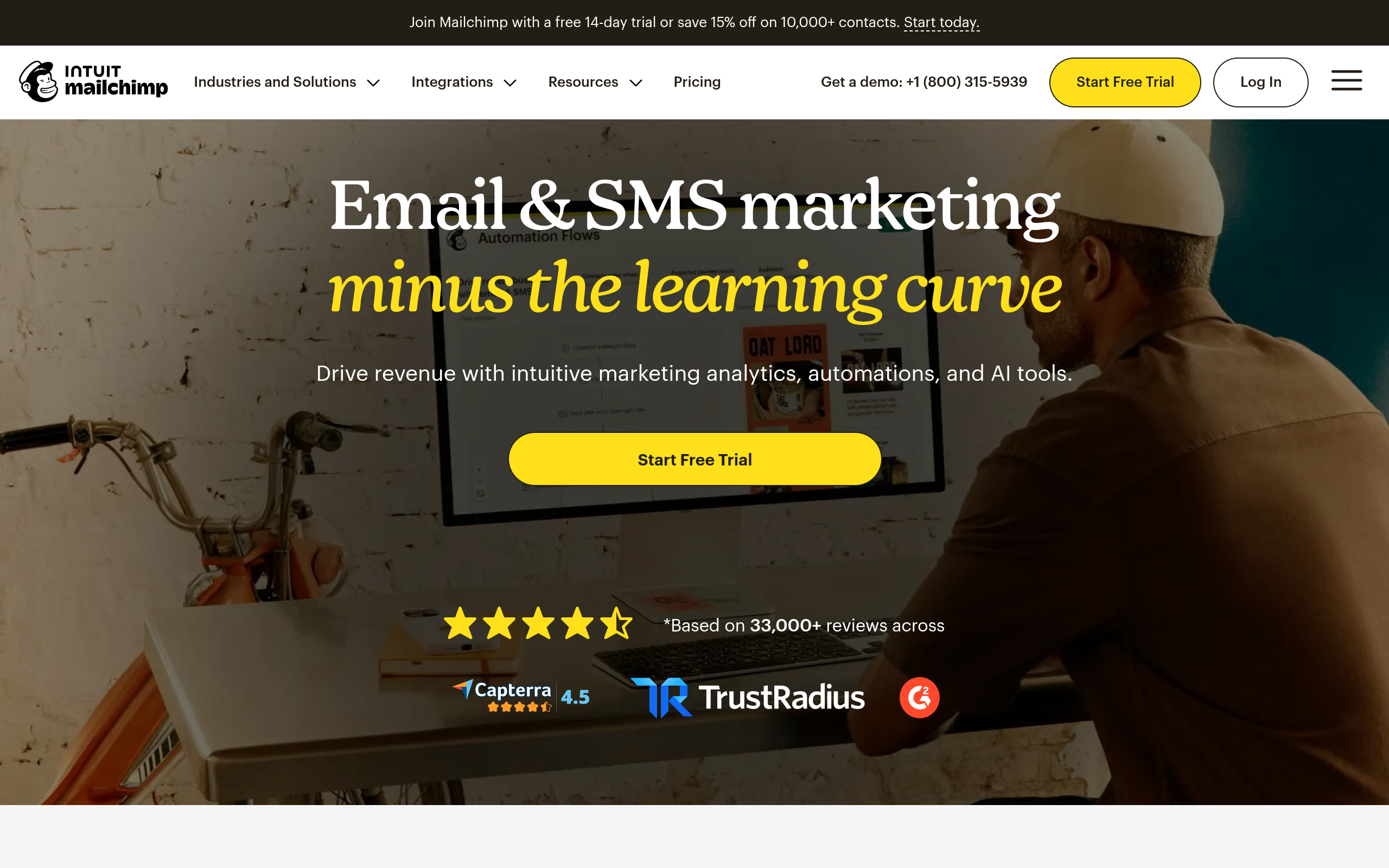
Mailchimp's homepage as of October 2026.
Intuit Mailchimp remains an established option with a straightforward drag-and-drop builder. It connects directly with e-commerce systems like Shopify to track opens, clicks, and revenue.
According to Mailchimp's published pricing documentation, the free plan provides 250 contacts and 500 emails per month, with a daily cap of 250 sends. Essentials plans begin around $13.00 monthly for 500 contacts.
In practice, the free tier excludes scheduled delivery and automated drip journeys. The platform strictly requires verifiable opt-in records, and audits can pause sending if bounce rates climb unexpectedly.
Best for: Solo founders testing simple newsletter templates on small audiences before upgrading.
MailerLite
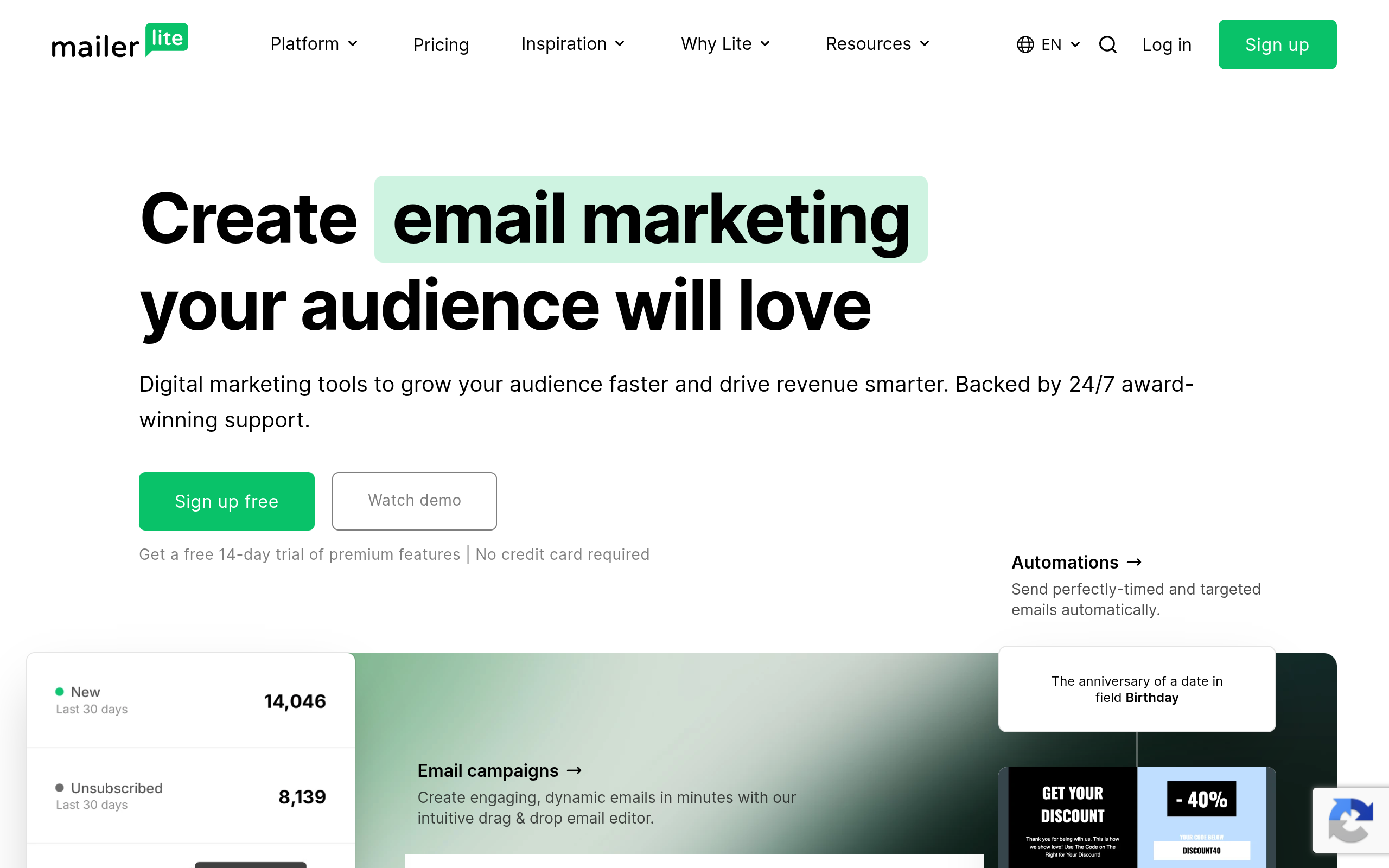
MailerLite's homepage as of October 2026.
MailerLite focuses on clean layouts for newsletters and content creators. The interface loads quickly, includes embedded forms, and renders consistently across mobile and desktop devices.
Based on MailerLite's pricing schedule, the free plan supports 250 subscribers and 2,500 monthly emails. Paid plans start between $10.00 and $15.00 monthly as your list expands.
Free customer support expires after your first two weeks, and automated sequences remain capped at three workflows. You must maintain verified subscriber permission before importing lists.
Best for: Independent consultants sending regular weekly updates to a small subscriber base.

Need Verified Business Contacts for Direct Outreach?
Pair your free email tool with verified B2B contact records from Go4Database to reach actual decision makers.
Brevo
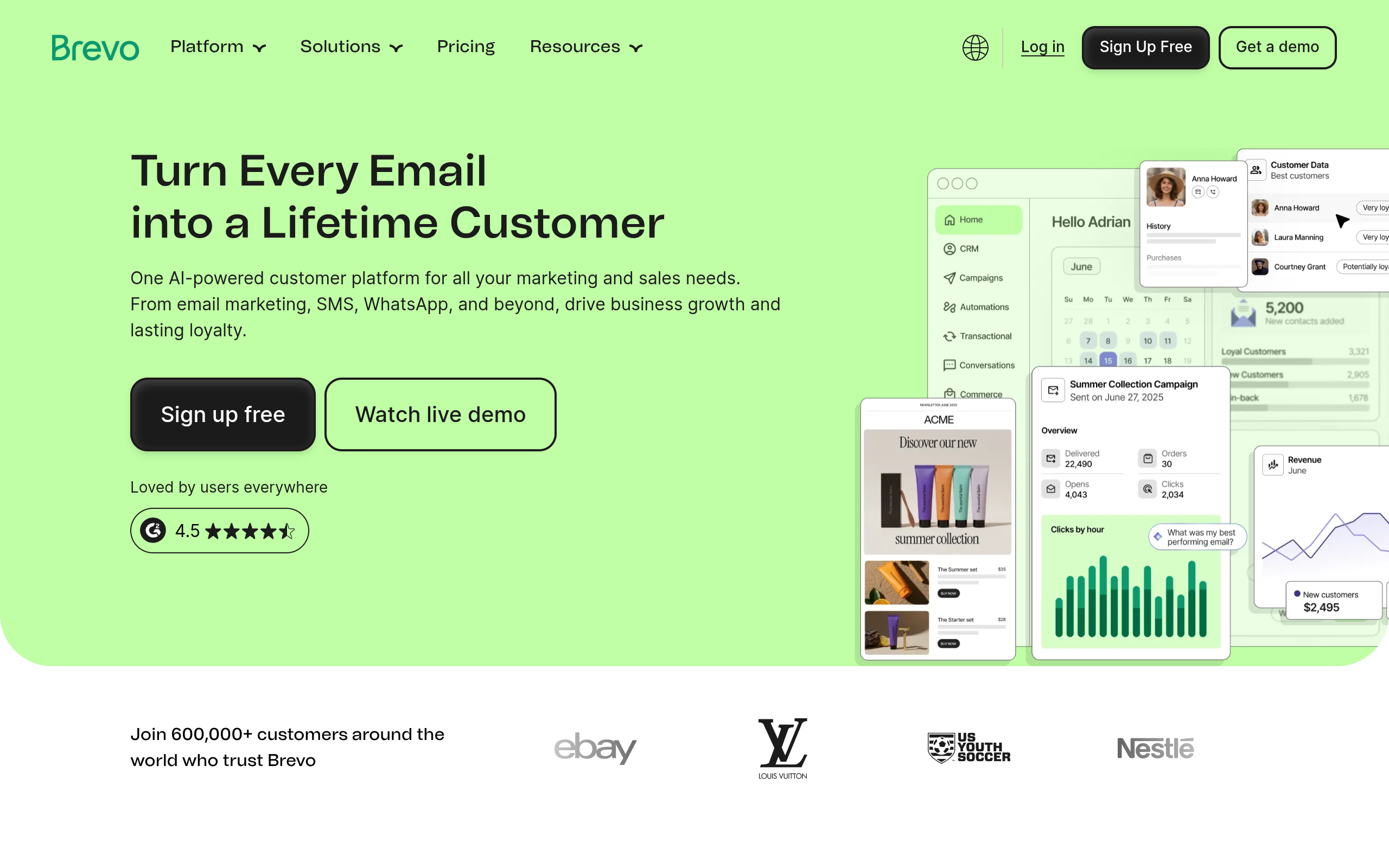
Brevo's homepage as of October 2026.
Brevo charges by send volume rather than stored contacts. Teams can store up to 100,000 contacts while managing transactional messages and live chat from one dashboard.
According to Brevo's published rate card, the free tier caps sending at 300 emails each day. Starter plans begin around $9.00 per month for 5,000 sends without daily throttles.
That daily limit rules out larger one-day broadcasts, and free messages include vendor branding in the footer. Brevo also pauses accounts if unverified contact uploads trigger deliverability warnings.
Best for: Teams with larger contact lists that send periodic updates under daily volume limits.
Fuel Your Free Tier with Clean Data
Maximize sending limits by loading verified B2B contact lists from Go4Database directly into your campaigns.
Sender
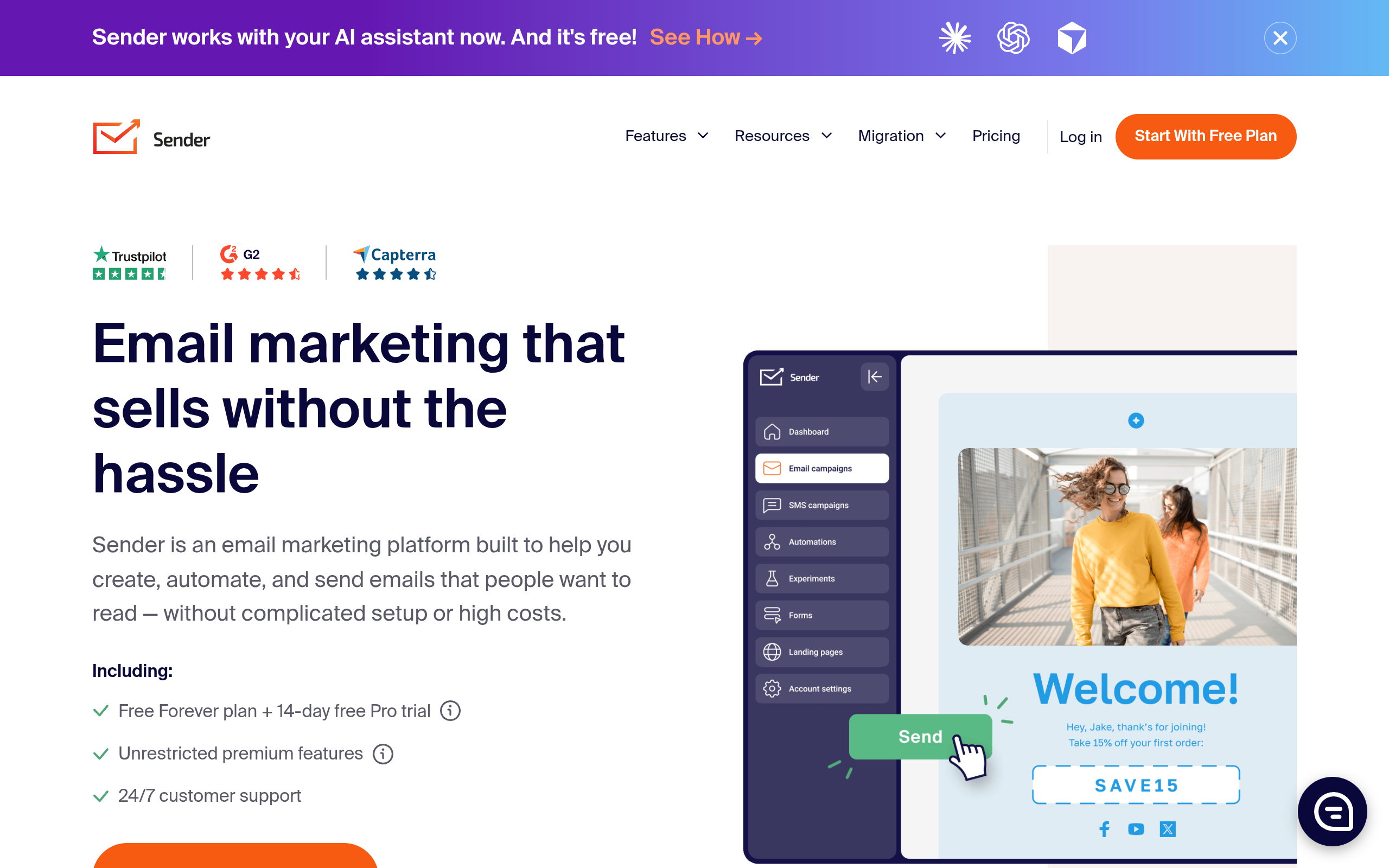
Sender's homepage as of October 2026.
Sender stands out for its generous limits compared to most newsletter tools. The free tier includes visual multi-step workflow automations, web forms, and cart recovery triggers with no daily send limits.
Based on Sender's official pricing page, free accounts receive 2,500 subscribers and 15,000 monthly messages. Upgraded plans start at roughly $10.00 to $15.00 monthly.
There are a few limitations. Free emails include a watermark badge, and Sender has fewer native integrations than older tools. Sender can also review accounts if spam complaints climb above 0.10 percent.
Best for: Bootstrapped teams that need reliable automations without immediate software expenses.
Preview Accurate Contacts for Your Target Industry
Review sample B2B contact data from Go4Database before loading prospect records into your email marketing platform.
HubSpot
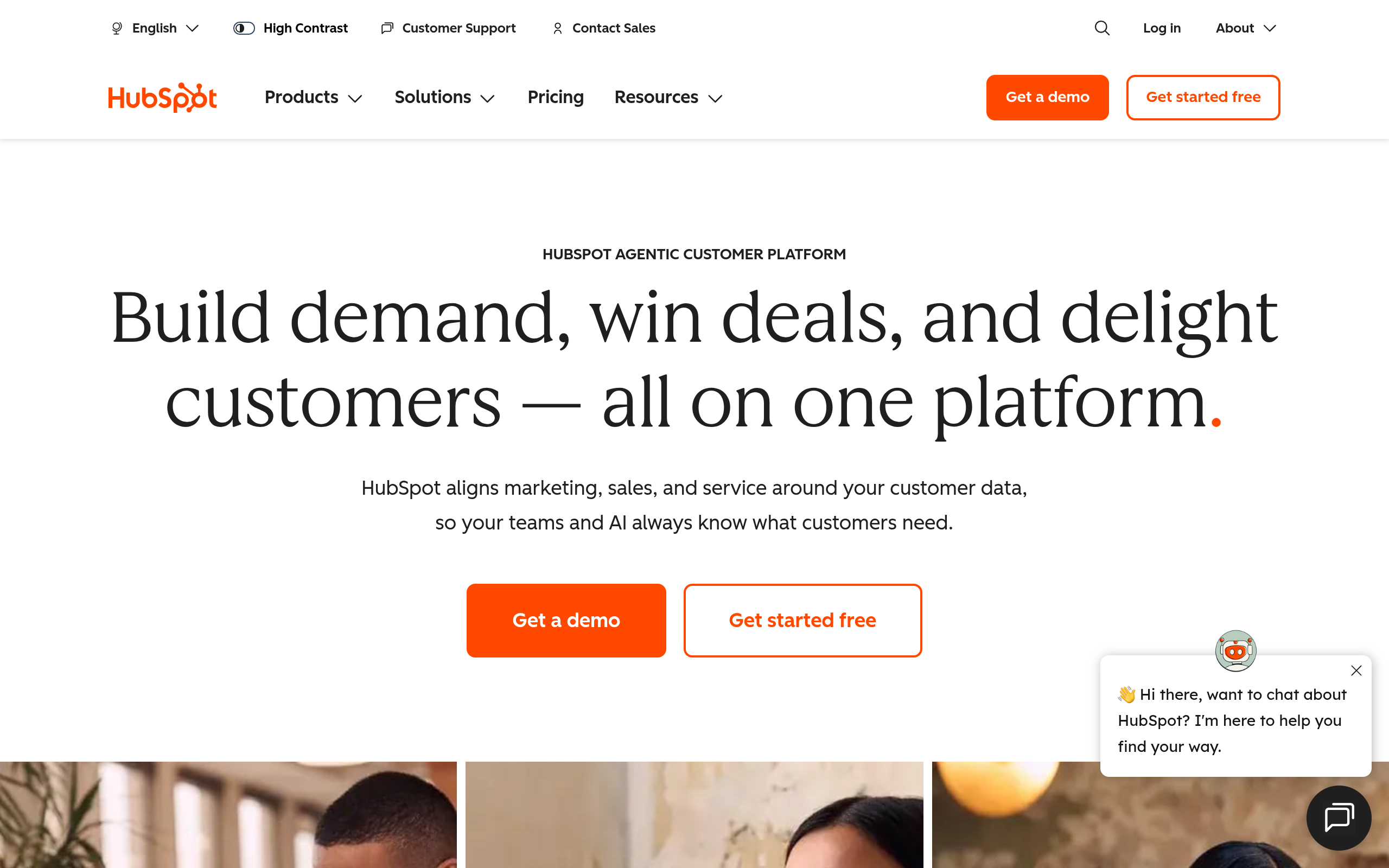
HubSpot's homepage as of October 2026.
HubSpot connects its email tools directly to its CRM database. The free builder lets you personalize messages using details pulled straight from individual contact records.
According to HubSpot's 2026 pricing guidelines, the free plan includes 2,000 monthly sends across 1,000 marketing contacts. Paid Starter packages typically start at $15.00 to $20.00 monthly.
There are limitations to keep in mind. Free sends route through shared infrastructure without custom DKIM alignment, and automated workflow triggers remain restricted to higher-tier paid plans.
Best for: Teams prioritizing centralized contact records over high-volume campaign sends.
Apollo.io
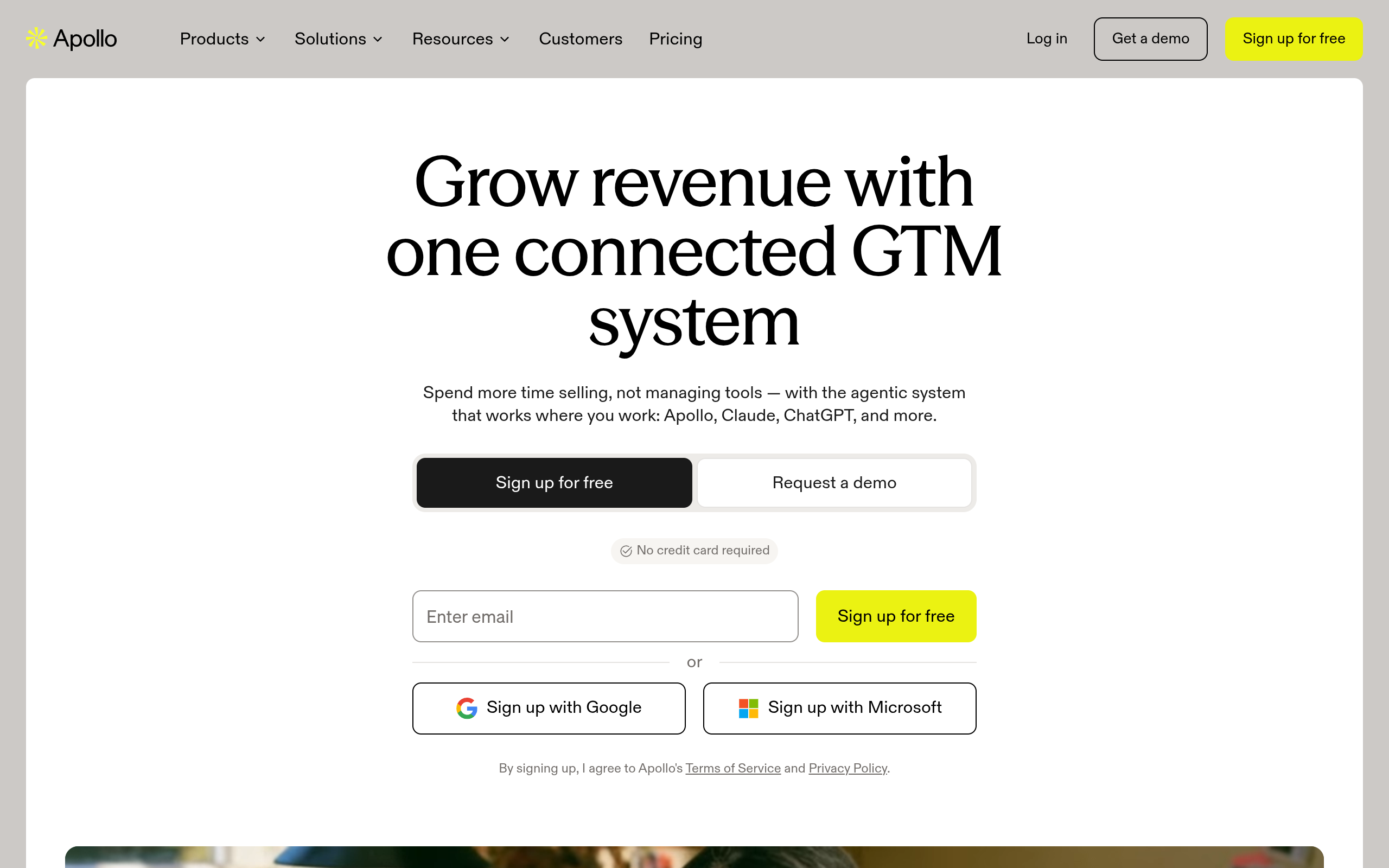
Apollo.io's homepage as of October 2026.
Apollo.io is built for outbound prospecting rather than traditional marketing broadcasts. It connects directly to business inboxes to deliver plain-text messages without landing in newsletter tabs.
Based on Apollo's published pricing plans, its free tier provides unlimited contact storage and 250 daily sequence sends. Paid basic plans start around $49.00 monthly per user.
There is an important catch, though. The free tier restricts contact data exports to roughly 60 records per year, and senders must carefully warm up mailboxes to protect corporate domain reputations.
Best for: B2B sales teams running targeted prospecting sequences to verified decision-makers.
Pro tip: When using tools with daily send limits, schedule your messages in smaller hourly batches to maintain steady server delivery.
TL;DR:
Sender and Brevo lead entry-level tiers for newsletter audiences, while outbound sales prospecting requires dedicated tools built for one-to-one messaging.
3. Best Free Email Marketing Platforms for Small Businesses
Small teams face real operational constraints. The best free email marketing platform depends entirely on your primary acquisition model.
First, consider the content nurture scenario. This fits businesses collecting opt-ins through blog posts, lead magnets, and site forms. Here, choosing Sender or Brevo makes sense to run welcome sequences for your newsletter audience without generating recurring software expenses.
The outbound pipeline scenario works differently. B2B service firms, software agencies, and consulting shops often lack high inbound website traffic and must proactively reach corporate decision-makers. Traditional free email marketing services prohibit uploading third-party prospect lists.
Acceptable use policies can freeze accounts when unfamiliar contacts produce bounce rates above 2 to 5 percent. In this scenario, teams rely on dedicated sales outreach tools paired with verified prospect records.
For storefronts, e-commerce sellers might also review Omnisend's pricing tiers. The platform offers 250 contacts and 500 emails monthly as a starter environment.
TL;DR:
Inbound newsletter strategies run well on tools like Sender or Brevo, but outbound business generation requires dedicated sales tools that protect your domain.
4. How to Choose the Right Email Marketing Tool for Your Business
Selecting reliable free email marketing providers requires looking beyond template galleries. You need to evaluate core technical requirements first.
Ensure the service allows custom SPF, DKIM, and DMARC alignment rather than routing through shared generic addresses. Check list import rules to see how platforms treat contact origins.
Calculate how monthly expenses jump once your subscriber list grows from 250 to 1,000 or 5,000 active records. Finally, confirm that you can cleanly export engagement metrics and unsubscribe data.
Data quality makes or breaks your outreach. Scraping unverified contacts from the web usually yields dead mailboxes that damage sender scores.
For outbound prospecting, go4database states it lists more than 400 million business contacts and 130 million verified mobile numbers across 845 categories. Teams can also explore segmented records through go4database industry directories to reach verified corporate titles directly.
Pro tip: Industry deliverability studies suggest verifying third-party contact lists before sending to keep hard bounces well below 2 percent.
TL;DR:
focus on technical domain authentication and accurate contact records over visual email templates to protect your delivery rates.
5. the Two Platforms vs. Paid Platforms: Which Is Better
Free tiers save money early on, but running free email marketing comes with practical trade-offs as your team expands.
Unpaid accounts share sending IP pools with unknown users. When careless senders damage those shared IPs, inbox placement drops for everyone on that pool.
Paid plans isolate your sending reputation from other users. That separation helps your messages land consistently in primary inboxes instead of spam folders.
Automation limits also matter. Mailchimp removes automations entirely from its free tier, while MailerLite caps free workflows at three paths.
Without automation, teams spend hours manually sending routine follow-ups. Paid tiers unlock multi-step nurturing and automated behavioral triggers that run in the background.
Platform branding is another trade-off. Watermark badges in your footers tell business recipients that your company still relies on entry-level tools.
Here is an important distinction: upgrading to an expensive platform will not fix poor deliverability if your underlying prospect data contains dead addresses.
A simple tool sending to verified contacts will always outperform an expensive enterprise platform blasting an outdated list.
TL;DR:
Free platforms suit early testing, but paid tiers offer cleaner branding, advanced automation, and isolated sending reputations as you scale.
Diagnosing Your True Outreach Bottleneck
When email campaigns fail to produce pipeline, operators usually blame their software first. They switch between Mailchimp, MailerLite, or Brevo, hoping a new builder will increase reply rates.
Software platforms only handle delivery mechanics. They cannot fix a vague offer, an undefined audience, or inaccurate contact data. If you send generic pitches to dead mailboxes, campaigns struggle regardless of the tool you choose.
Before paying for expensive platform upgrades, audit your core sales process:
- Define your ideal customer profile by job role, industry vertical, and company size.
- Send messages directly to verified, active decision-makers rather than generic support addresses.
- Configure proper SPF, DKIM, and DMARC records on an authenticated business domain.
- Follow up consistently instead of relying on a single campaign broadcast.
Once you fix your targeting and data accuracy, your software can actually do its job.
Frequently Asked Questions
You might have these questions in your mind?