You spend three hours drafting an announcement for your services, polish the copy, hit send, and wait. Days pass, yet your sales dashboard stays flat. Delivery reports show that half your messages landed in spam folders. Running a lean team means you cannot afford wasted hours or expensive ad experiments.
Paid digital ad costs keep climbing, and social media algorithms change without warning. Direct inbox communication remains your most dependable sales channel.
In practice, Email marketing for small business works by sending relevant messages that build trust, nurture inquiries, and generate predictable revenue. Done well, it reliably converts qualified leads into repeat buyers.
Email marketing for small business is the process of sending targeted, affordable commercial messages to prospective and existing customers. This approach matters because it allows lean teams to promote their products, nurture customer trust, and generate predictable sales with measurable financial returns on a limited marketing budget.
Rather than blasting unverified directories, small teams succeed by searching and downloading verified decision-maker records with us at Go4Database. From there, you pair reliable data with authentic, thoughtful communication.
1. How to Build an Email Marketing Strategy for Small Businesses
Many founders buy software before defining their audience. They send broad messages to unsegmented lists and wonder why nobody replies. A reliable strategy starts with clear targeting before you write a single subject line.
In practice, you need three basic pieces in place: your ideal buyer profile, a relevant offer, and proper delivery infrastructure. If any piece breaks down, campaigns stall before reaching actual prospects.
Mailbox providers filter incoming messages strictly. That means operational discipline and technical setup matter from day one, long before you think about scaling your volume.
What Is the Most Effective Email Marketing Strategy for Small Businesses
A practical strategy balances warm audience nurturing with targeted outbound prospecting. Industry surveys from Forbes Advisor show that roughly 64% of small companies rely on email as their primary channel for customer communication.
Within that same research, 53% identify it as their most reliable driver for buyer acquisition. According to a recent benchmark study from Litmus, commercial email delivers an average return of roughly $36 for every dollar spent.
Reaching those returns requires setting distinct conversion goals for each segment instead of treating your entire list as one audience. That means separating outbound lead generation from inbound customer newsletters.
Outbound campaigns introduce your business to new decision-makers who do not know you yet. Inbound campaigns nurture subscribers who signed up on your website to receive your latest business email updates.
The Technical Foundation: SPF, DKIM, and DMARC Alignment
Mailbox providers do not grant passes to smaller companies on technical authentication. Technical documentation from PowerDMARC notes that major mailbox providers issue automated permanent rejections on senders lacking SPF, DKIM, and aligned DMARC records.
These three records confirm that your domain authorized the mail server sending your message. In simple terms, SPF acts like a public guest list that names which servers can send emails for your domain.
DKIM attaches a secure digital signature to verify that nobody altered the text in transit. DMARC then tells receiving inboxes what to do if an incoming message fails those validation checks.
Assuming that low sending volume protects your domain from penalties is a costly mistake. Modern inboxes enforce authentication rules equally across senders of all sizes.
Sender guidelines on the Yahoo Sender Hub state that senders should keep spam complaint rates below 0.10% and avoid exceeding 0.30% to prevent throttling.
Pro tip: Set your initial DMARC policy tag to p=none during your first month of sending so you can review authentication reports without accidentally blocking valid team messages.
2. 15 Email Marketing Tips to Increase Engagement and Sales
Getting dependable sales from email marketing for small businesses comes down to practical execution. These fifteen tactics help keep your messages in the primary inbox and turn readers into buyers.
Pillar 1: Infrastructure and Deliverability Fundamentals
1. Isolate Cold Outreach on Dedicated Secondary Domains:
Never send cold prospecting messages from your primary company domain. Instead, register secondary domains that mirror your brand and use them strictly for outbound business development.
2. Implement RFC 8058 One-Click Unsubscribe Headers:
Standard email protocol outlined in RFC 8058 allows mail apps to display a direct unsubscribe button. Unengaged contacts can leave cleanly without reporting your message as spam.
3. Monitor Google Postmaster Tools Weekly:
Check your domain reputation metrics against the Google Email Sender Guidelines and Postmaster dashboards. This tracking shows whether Gmail filters view your IP and sending domain as healthy.
4. Keep Spam Complaint Rates Below 0.10%:
Yahoo and Google standards show that roughly three complaints for every thousand delivered messages can divert future campaigns into junk folders. Consistent list maintenance protects your sender reputation.

Fuel Your Sales Outreach With Verified Contacts
Get verified B2B contact data from Go4Database to put these practical sales engagement tips into action.
Pillar 2: Audience Segmentation and List Hygiene
1. Prune Inactive Contacts Every 60 Days:
Keeping inactive subscribers hurts your inbox placement over time. If a contact opens zero messages over a two-month span, pause them from your standard broadcast schedule.
2. Segment by Industry Category and Specific Pain Point:
Send notes addressing specific operational problems rather than generic company announcements. Segmenting by industry lets you speak directly to what a buyer faces each day.
7. Strip Structural HTML Bloat:
Research from MessageFlow showed that roughly 74% of evaluated marketing messages contained HTML errors that tripped spam filters. Clean, lightweight formatting delivers far more reliably.
Pillar 3: Copywriting, Formatting, and Conversion Mechanics
1. Adopt Minimalist, Plain-Text Formatting:
Heavy graphic layouts often push messages into promotional tabs. Plain-text emails feel like a standard workplace note and usually earn higher response rates.
2. Write Subject Lines That Mirror Internal Dialogue:
Skip excessive capitalization, artificial urgency, and exaggerated claims. Short, clear subject lines that read like a quick question from a colleague tend to perform much better.
3. Anchor Copy on a Single, Low-Friction Call to Action:
Multiple links and competing requests quickly overwhelm a busy reader. Ask one clear question or invite a brief reply to start a genuine conversation.
4. Review Click-to-Open Rates and Direct Replies:
Modern privacy features automatically cache tracking pixels, which inflates open rates. Focusing on click-to-open rates and direct responses gives you a much clearer picture of real buyer interest.
Pillar 4: Workflow Optimization and Intelligent Testing
1. Use Software Assistance for Audience Segmentation:
Small teams rarely have time to sort lists manually. Setting automated rules to group contacts by their engagement level frees up hours for direct prospect research.
2. Time Inbound Broadcasts to Active Working Hours:
A recent deliverability study by Geysera estimated that promotional inbox placement dropped to roughly 53.7%. Scheduling sends during mid-morning business hours helps your note land when readers actually check email.
3. Apply Multi-Channel Verification Before Sending:
Always confirm email deliverability and phone records before launching outreach sequences. Sourcing verified contacts from our marketing decision maker list gives you a direct phone route if a promising email stalls.
4. Run Re-Engagement Checks Before Deleting Contacts:
Send a quick check-in note to inactive subscribers before removing them from your database. Ask if they still want to hear from you, and honor their preference immediately if they decline.
Pro tip: Invite new subscribers to reply to your welcome email with a short sentence. That positive reply signals to inbox filters that your domain is a trusted contact.
3. Best Email Marketing Platforms for Small Business Growth
Choosing software depends on how you plan to reach people. Inbound newsletter tools help you stay connected with subscribers who opted in on your site. Outbound outreach requires separate infrastructure, secondary domains, and distinct sending logic.
Comparing email marketing platforms for small business means reviewing pricing structures, automation flexibility, and sending guidelines. Some tools charge for every contact stored, while others bill strictly for the volume of messages you send each month.
| Platform | Best For | Entry Price | Core Strengths | Outbound Policy |
|---|---|---|---|---|
| Brevo | Inbound campaigns and transactional messaging | Free tier; paid plans from $25/month | Unified email and SMS workflows | Strict opt-in only; no cold outreach |
| Mailchimp | Beginners needing visual templates | Free tier; paid plans from $20/month | Simple drag-and-drop newsletter builder | Contact-tier billing; forbids cold lists |
| ActiveCampaign | Advanced B2B nurturing and CRM logic | Paid plans starting around $29/month | Detailed behavioral triggers and sales sync | Opt-in inbound only; cold data prohibited |
1. Brevo
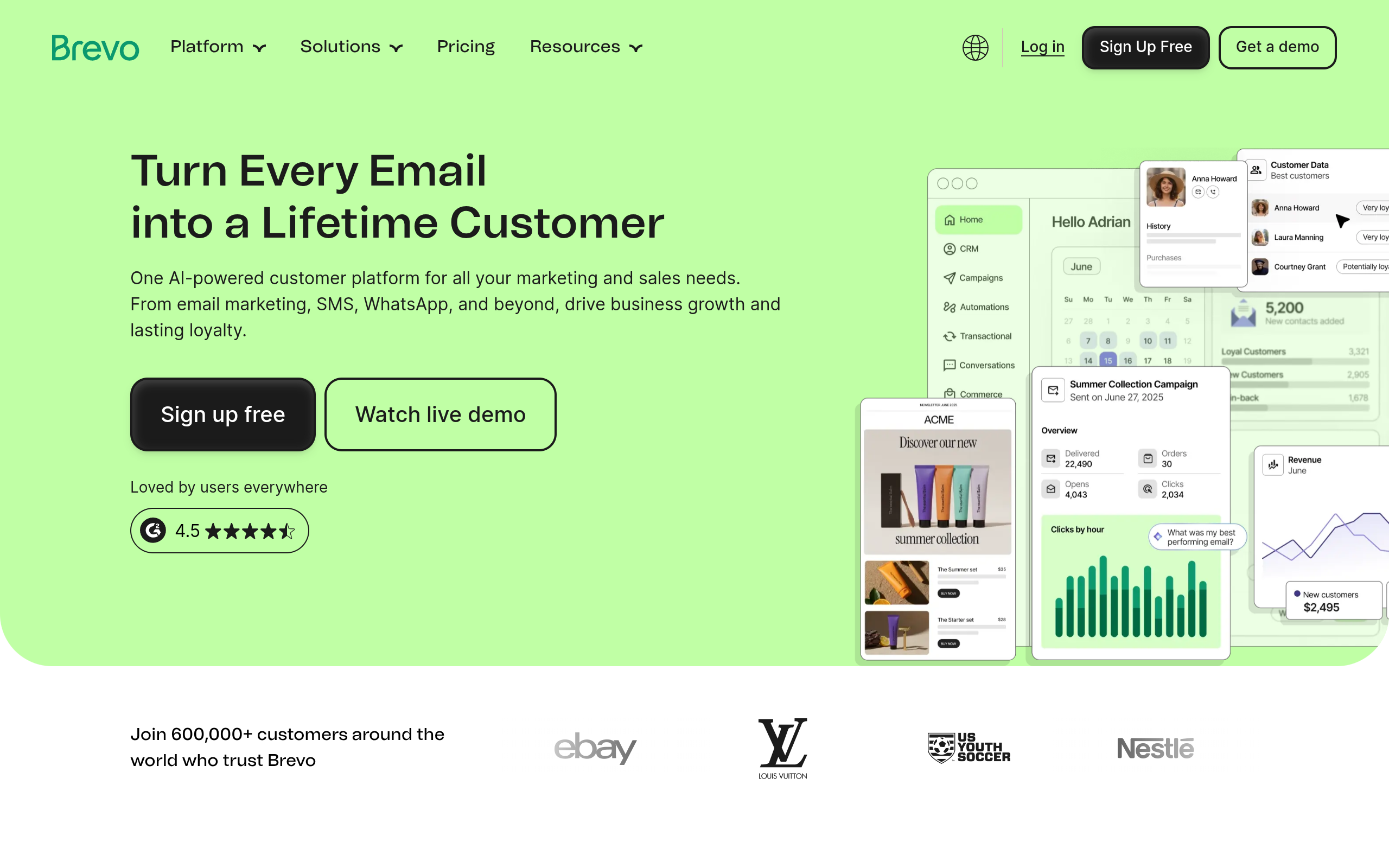
Brevo's homepage as of October 2026.
Brevo works well as an all-in-one messaging platform for growing teams. It bills by monthly email volume rather than total contacts stored, which keeps costs manageable for larger lists.
You also get built-in SMS options and simple pipeline management. That setup fits service providers and small shops, though custom styling can feel basic unless you edit HTML directly.
Power Your Email Platform With Fresh Leads
Import clean B2B contact records from Go4Database directly into your chosen email platform to scale outreach.
2. Mailchimp
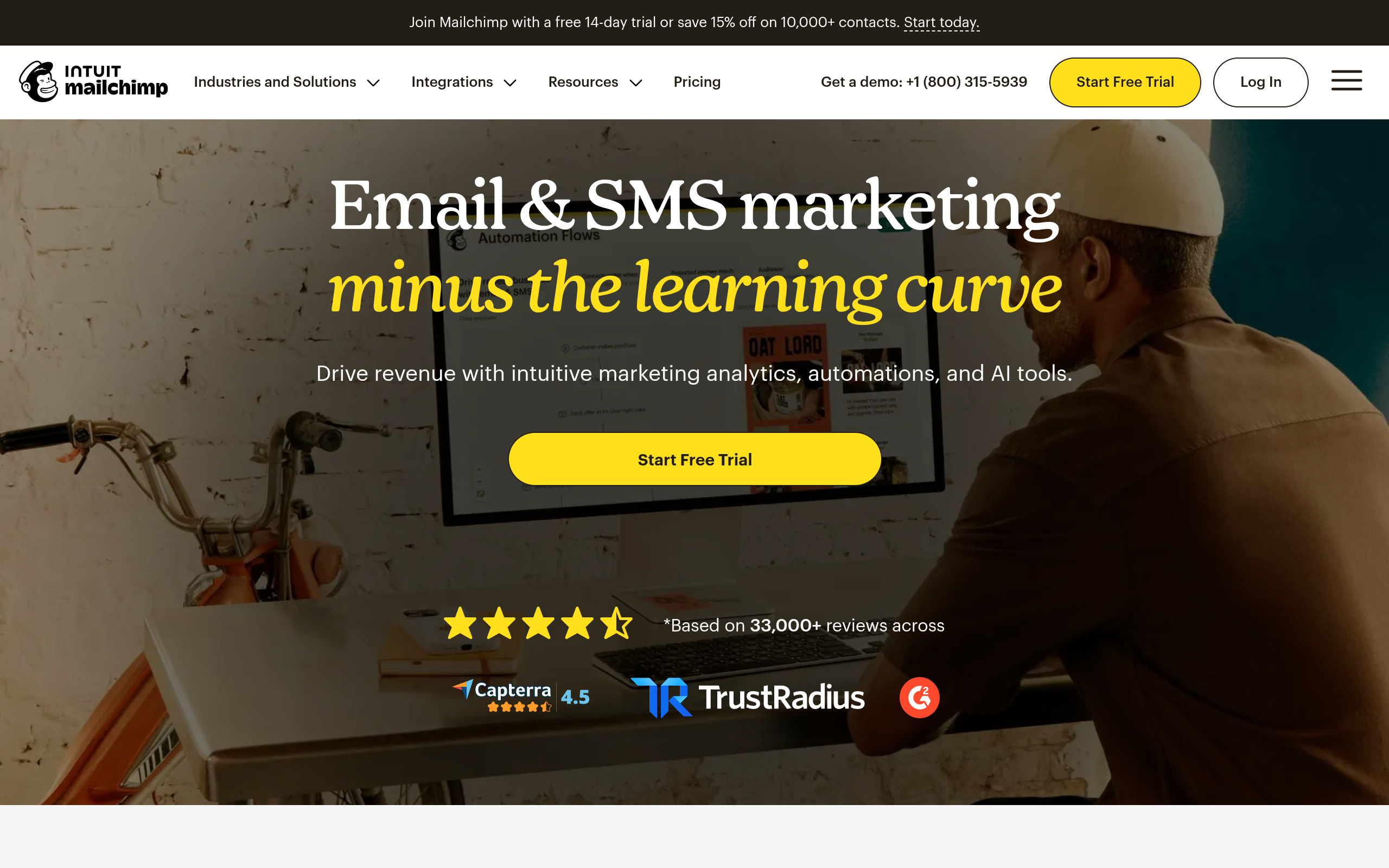
Mailchimp's homepage as of October 2026.
Mailchimp is one of the most familiar email marketing services for small business owners launching their first newsletter. It provides an intuitive layout builder, pre-designed templates, and simple connections to major ecommerce systems.
That makes it accessible for non-technical users who want to design clean visual announcements. Costs increase steadily as your subscriber list expands into higher tiers.
3. ActiveCampaign
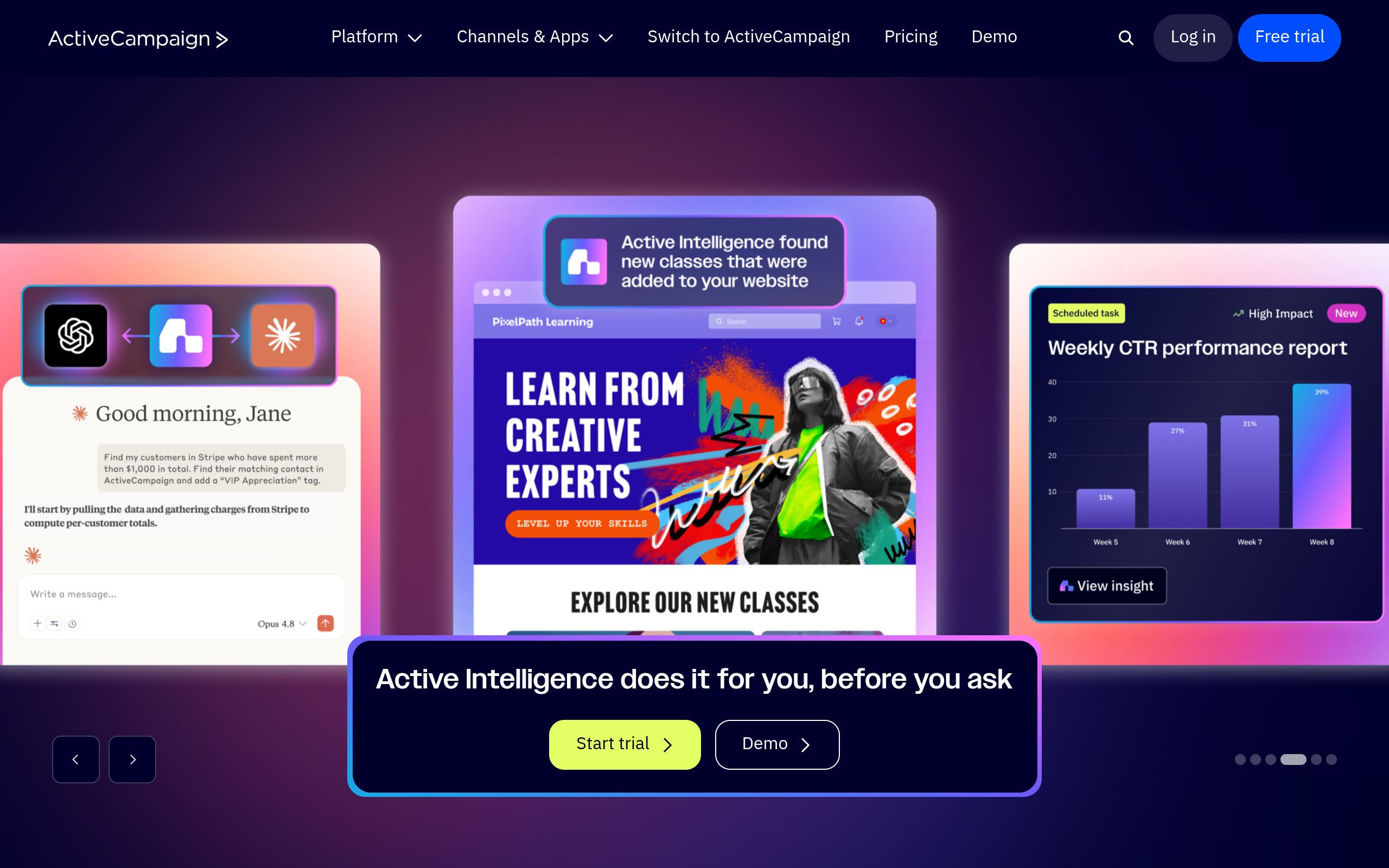
ActiveCampaign's homepage as of October 2026.
ActiveCampaign pairs workflow automation with integrated sales tracking. It monitors prospect behavior across your site, triggering follow-ups after form submissions, link clicks, or deal updates.
This makes it a practical option for teams seeking the best email for small businesses managing multi-step sales processes. The builder gives you direct control over pipeline stages and contact scoring.
The primary tradeoff is complexity. Setting up multi-branch automations takes real planning, so it requires more setup time than a basic email tool.
4. How to Build and Grow a Targeted Small Business Email List
Relying solely on website sign-up forms can leave your pipeline thin for months. An early-stage business usually needs time to build organic traffic that converts into subscribers. Direct outreach gives you far more immediate control.
Manual web scraping carries real risk. Pulling unverified addresses from random pages leads to delivery bounces, syntax errors, and spam traps. Experienced teams focus on verified prospect data to hit their sales goals.
Can Small Businesses Legally Buy B2B Email Lists to Accelerate Outbound Growth
Under the United States CAN-SPAM Act, enforced by the Federal Trade Commission, emailing business professionals is standard commercial practice. You simply need to follow clear rules.
Your message must identify your company, include a physical business address, and provide an easy opt-out mechanism. The content also needs to be relevant to the recipient's daily work.
Sending consumer promotions to corporate inboxes wastes resources and damages your sender reputation. Outbound campaigns succeed only when the message fits the role.
Evaluating the email marketing services small business operators use comes down to data maintenance. Sourcing verified decision-makers from our targeted US business email list helps you reach active buyers instead of abandoned inboxes.
Sourcing Decision-Maker Data with Go4Database
Manual prospecting across social profiles takes hours. Through Go4Database, teams can search, filter, and download clean prospect files directly, narrowing searches by industry categories, company headcount, location, and management level.
The Go4Database platform indexes more than 400 million business records, 130 million verified mobile numbers, and executive profiles across 9,000 industry classifications and 845 B2B sectors. Active since 2012, it helps sales teams keep bounce rates minimal.
Testing the data is practical before making a commitment. The Go4Database Free Trial provides 100 free contacts each month for a full year without asking for a credit card.
When your outreach expands, the Nano plan offers 1,500 monthly contacts for $35. The Micro Active tier provides 3,000 monthly contacts across 10 seats for $59, supported by a 30-day money-back guarantee.
Accelerate Your Targeted Email List Growth
Grow your subscriber base faster by sourcing accurate B2B contact records directly from the Go4Database platform.
5. Email Marketing Automation Strategies to Convert More Leads
Automated workflows let you reply quickly to prospects without writing every email manually. Benchmark research from Omnisend shows that automated lifecycle messages generate higher revenue per email and convert better than standard blasts.
Building these workflows does not require complex technical setups. Three simple lifecycle sequences are enough to nurture subscribers and turn early interest into sales calls.
High-Converting Lifecycle Sequences for Lean Teams
Start with a welcome sequence for new subscribers. Send the first note right away to share the promised resource and set clear expectations. Follow up two days later with a short example showing how your service solved an operational challenge.
Next is an educational series for warm prospects who regularly click your links. Over two weeks, send three practical emails that break down a single business problem. Teach clear steps here rather than pitching your services aggressively.
Finally, set up a re-engagement check for prospects whose inquiries went quiet. When someone stops replying, send a note five days later asking if project priorities shifted. Keep it under four sentences so they can reply easily from their phone.
Pro tip: Space follow-up emails roughly 48 to 72 hours apart so your sequence feels like a natural conversation rather than an automated barrage.
Diagnosing Your Email Pipeline: Beyond Software Subscriptions
When outreach fails to produce pipeline, small teams often blame their software. They switch platforms repeatedly, hoping a fresh dashboard will fix sluggish response rates. Software simply delivers the copy you write to the contacts you provide.
Sustainable results rest on three fundamentals: pre-verified prospect records, proper technical domain setup, and a clear, relevant commercial offer.
When you separate outbound sending from your main domain and keep contact records clean, email remains one of the most reliable growth channels available.
Frequently Asked Questions
You might have these questions in your mind?