You can spend weeks tweaking newsletter subject lines and still struggle to generate steady sales pipeline. Most marketing managers assume that poor performance stems from dull copy or clunky templates.
Email marketing services are specialized platforms and professional agencies that manage commercial messaging, workflow automation, and audience segmentation for businesses. They matter because they help companies deliver personalized campaigns at scale, protect sender reputation, and convert prospective leads into measurable revenue without manual outreach.
In practice, the breakdown usually happens much earlier in your tech stack. Teams often struggle to find the right balance between self-serve sending tools and outsourced strategic partners.
When open rates drop, leaders wonder whether they need a new platform, an outside partner, or better audience data.
Email marketing services encompass the software platforms, technical infrastructure, and specialist agencies used to design, automate, and deliver commercial messaging directly to customer inboxes.
Protecting sender reputation and campaign performance requires reliable audience data alongside delivery infrastructure. Modern teams frequently combine these delivery tools with verified business contacts sourced from our database at go4database.
1. What Are the Best Email Marketing Services for Brands in 2026
Choosing the right setup starts with a clear distinction. An email service provider handles the technical delivery, while an external email marketing agency handles strategy, copywriting, and calendar schedules.
Deliverability is usually the first place things break down. According to the Validity Deliverability Benchmark Report, roughly 1 in 6 commercial emails (16.5%) fails to reach the inbox, leaving the global inbox placement rate at 83.5%.
Stale subscriber records cause most of these placement failures.
Mailbox providers strictly enforce delivery standards. The Google Sender Guidelines and Yahoo Sender Best Practices mandate SPF, DKIM, and DMARC authentication.
They also require bulk senders to keep spam complaint rates below 0.10% and avoid reaching 0.30%.
SPF tells receiving servers which IP addresses can send mail for your domain. DKIM adds a digital signature verifying messages remain untampered, and DMARC instructs inboxes how to handle messages that fail those checks.
A common mistake is uploading cold prospect lists into self-serve inbound platforms like Klaviyo or Mailchimp.
Inbound systems monitor complaint spikes closely. Importing unverified contacts can quickly damage your domain reputation, so safe prospecting requires dedicated outbound tools and verified business records.
Pro tip: Always isolate your primary corporate email domain by running cold outbound prospecting campaigns exclusively on secondary domain variations.
TL;DR:
Choosing the right email marketing services requires separating software tools from strategic human execution. Great software cannot bypass deliverability rules if your database is decaying, which is why pulling fresh contacts from our platform at go4database is a practical first step before hitting send.
2. Top Email Marketing Agencies for Campaign Management and Growth
Hiring an agency helps when your internal team runs out of time. Specialized email marketing firms step in to handle design, technical coding, and strategic automation templates.
Even experienced teams struggle if audience targeting is too broad. The difference comes down to how well an agency structures campaigns around your specific business model.
InboxArmy
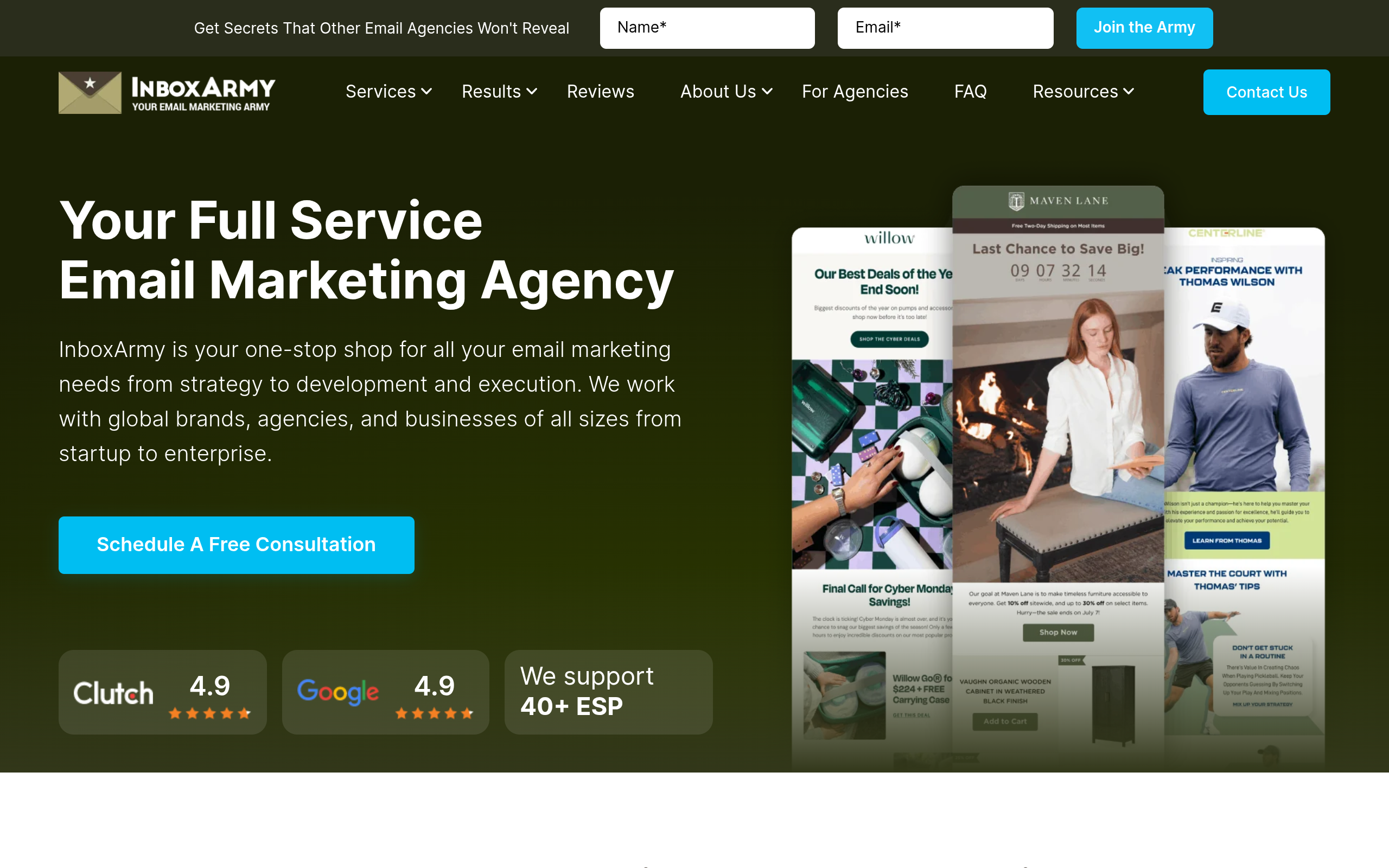
InboxArmy's homepage as of October 2026.
InboxArmy handles template production, custom coding, and migration support for growing commercial brands. Their team builds workflows across dozens of enterprise platforms, offering fast turnarounds on modular email assets.
Their focus is hands-on production rather than outbound prospect research. Mid-market eCommerce brands and lean teams benefit most when they need steady campaign execution without adding in-house headcount.

Fuel Your Outreach With Verified Business Contacts
Power your agency campaigns using verified B2B contact lists from Go4Database to reach qualified prospects quickly.
SmartSites
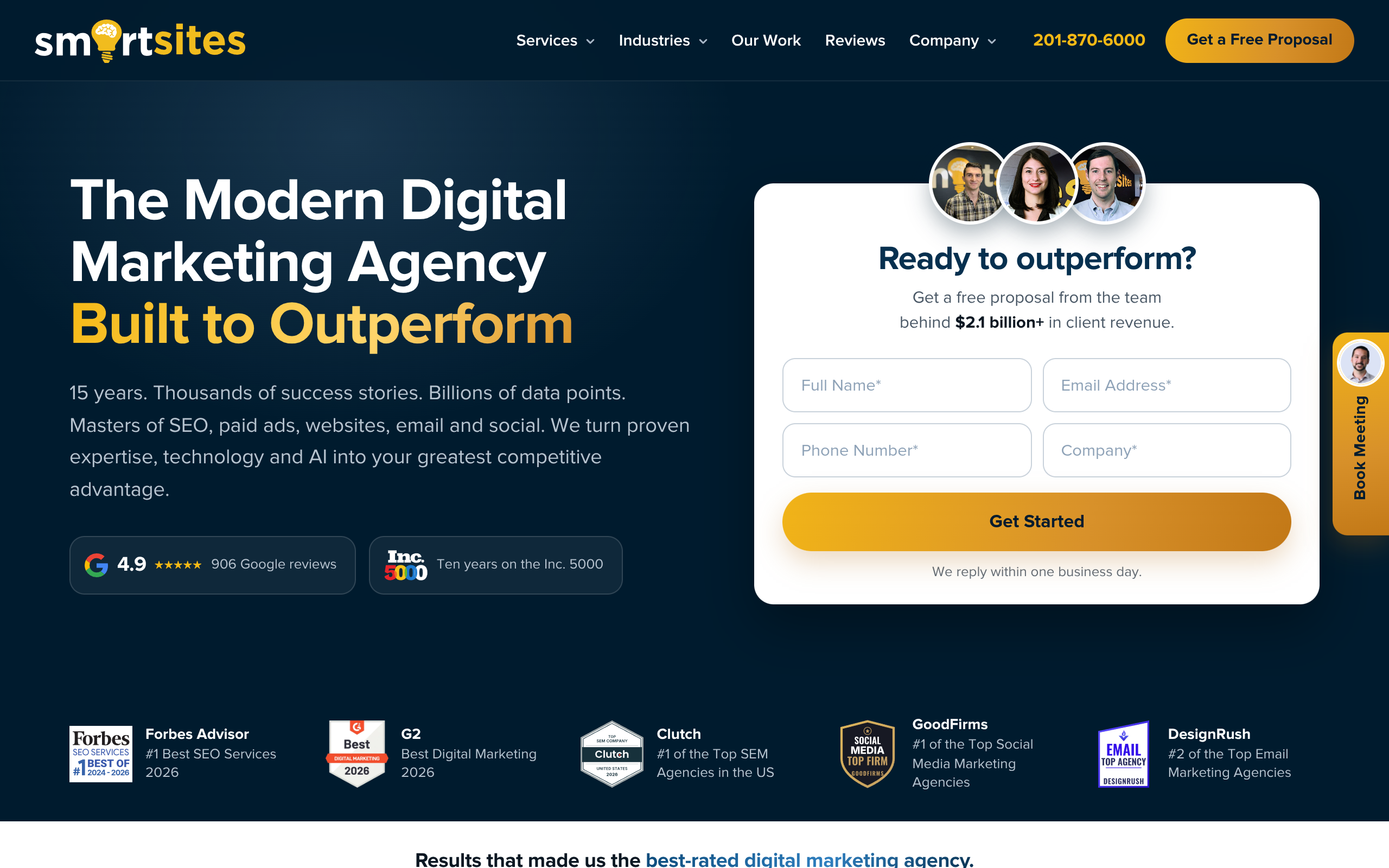
SmartSites's homepage as of October 2026.
SmartSites is a digital agency that connects email automation and SMS directly into paid search. Dedicated account managers align lifecycle campaigns with broader ad channels so retention works alongside acquisition.
Because retainers often bundle email with paid media and web development, monthly costs can stretch smaller budgets. They suit growing brands looking for a single partner to manage customer retention and paid search together.
Flowium
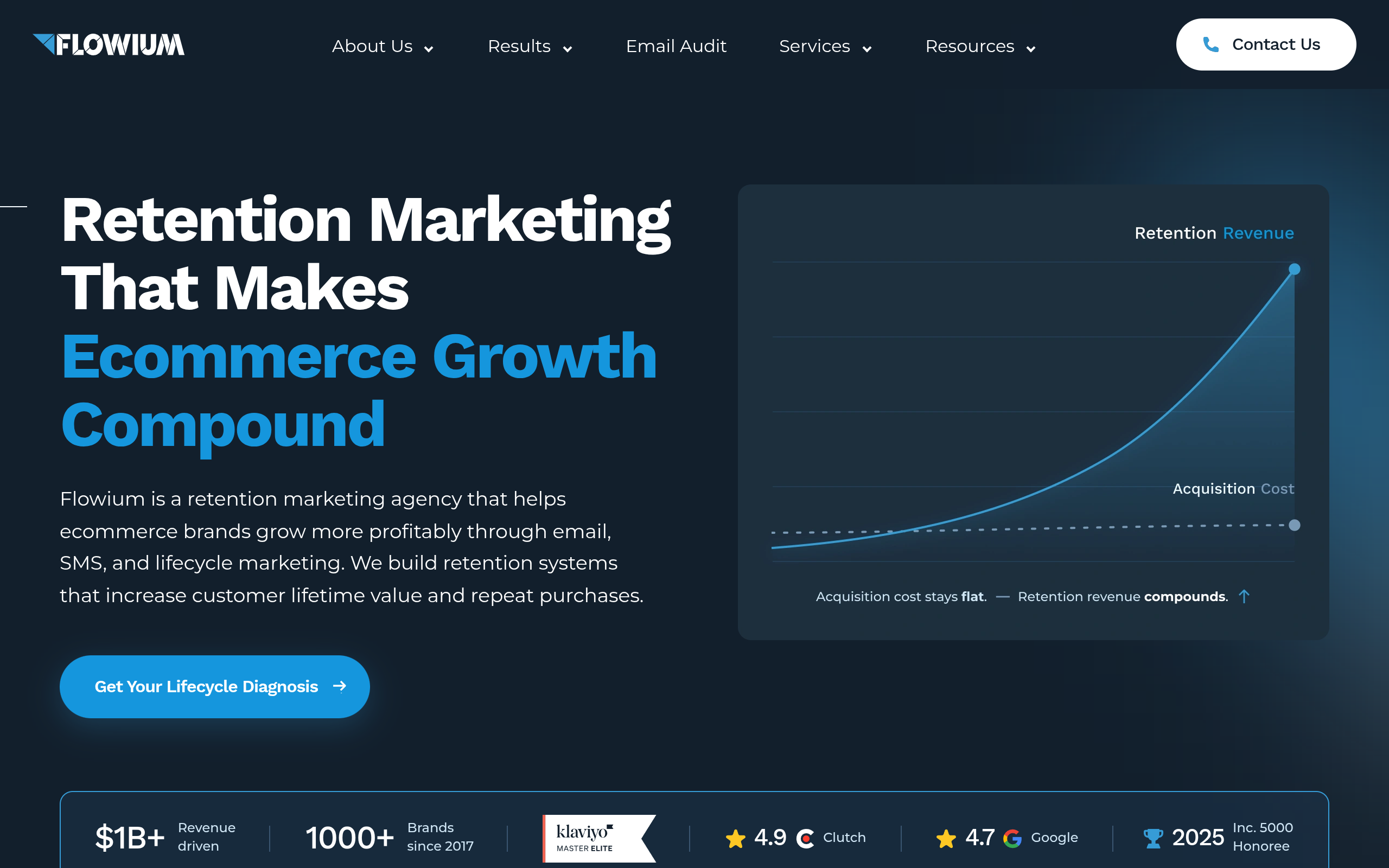
Flowium's homepage as of October 2026.
Flowium focuses on lifecycle marketing, particularly customer retention and repeat purchases. They build behavioral automation sequences for direct-to-consumer and retail brands, tracking how those flows affect customer lifetime value.
They do not manage outbound sales prospecting. Instead, they work strictly with opted-in subscribers, helping established retail brands scale repeat orders from an existing customer list.
Belkins
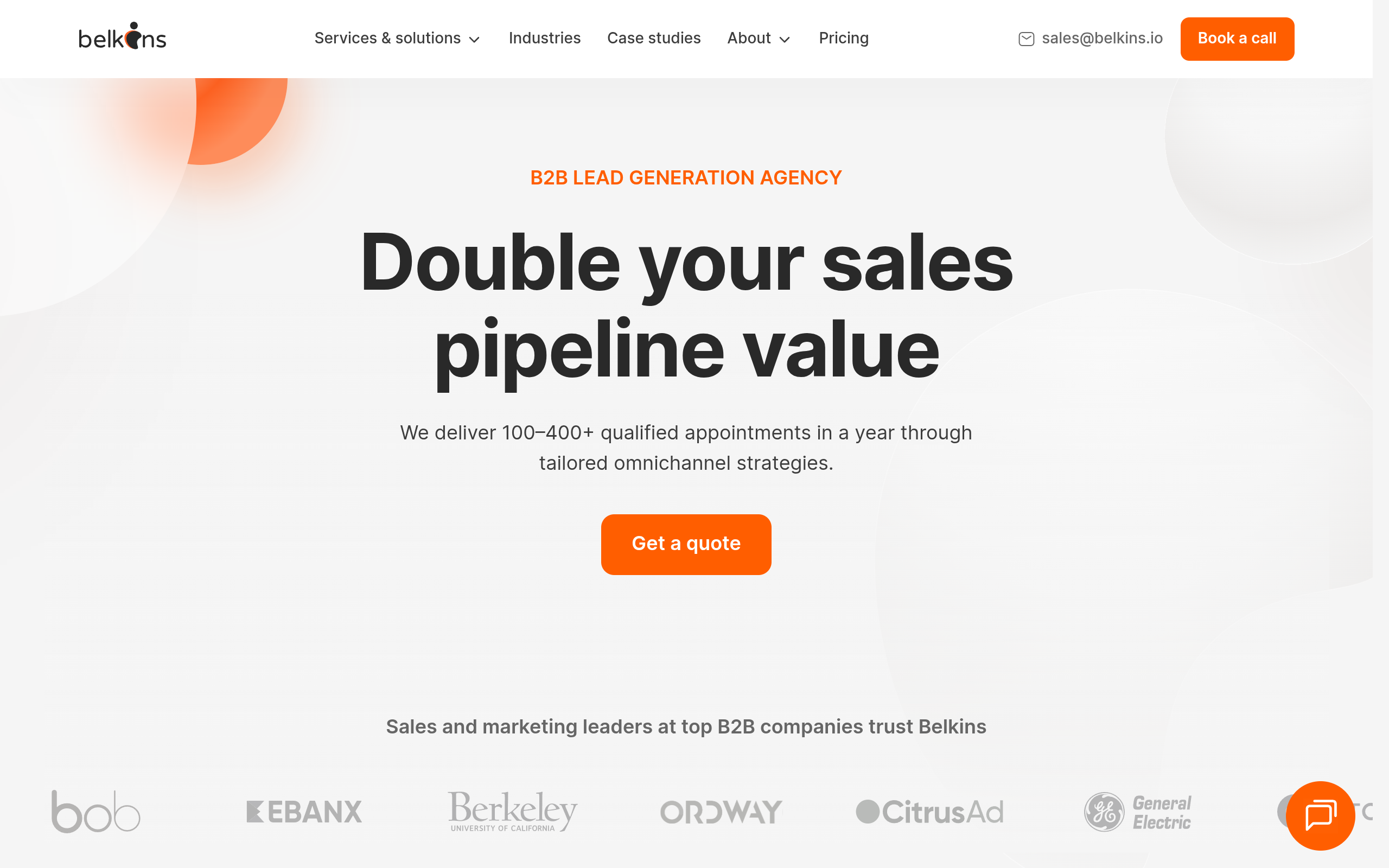
Belkins's homepage as of October 2026.
Belkins is a B2B outbound agency that handles custom lead research and direct outreach sequences. They book qualified discovery meetings for growing business development teams using dedicated outbound sending domains.
Outsourced meeting generation costs more than software and requires tight agreement on prospect qualification. B2B service firms and software startups use them when they prefer an outsourced pipeline over hiring an internal development team.
3. Email Marketing Services Compared: Features, Pricing, and Benefits
Brands often overpay for monthly agency retainers when their core problem is a lack of fresh audience data. Research published in the Litmus State of Email benchmark shows that commercial email yields roughly $36 for every $1 invested.
Teams hit that return only when they deliver timely messages to accurate addresses. According to Validity benchmarks, Microsoft Outlook maintains a 75.6% average inbox placement rate and a 14.6% spam folder placement rate.
Reaching business decision-makers requires clean recipient data that bypasses automated corporate filters. Comparing the main delivery models clarifies what your team actually needs to succeed.
| Operational Model | Typical Monthly Investment | Core Primary Strength | Key Vulnerability / Limit | Best Fit Business Profile |
|---|---|---|---|---|
| In-House ESP Software (e.g., Mailchimp, Klaviyo) | Industry estimates range from $50 to $450 / month | Total creative autonomy and fast direct campaign deployment | High risk of domain suspension if sending to unverified cold lists | Brands with active, organically opted-in inbound subscriber lists |
| Full-Service Agencies (e.g., SmartSites, InboxArmy) | Industry estimates range from $2,500 to $7,000 / month | Turnkey professional copywriting, coding, and strategic lifecycle roadmaps | High overhead retainers that do not fix underlying list decay issues | Established brands needing complete creative delegation |
| Targeted Contact Data (via go4database) | $0 (Free Trial) to $59 / month (Micro Active plan) | Direct access to verified decision-makers across 9,000+ industries in our platform | Requires team to write own copy and execute outbound sending systems | Solo operators, startups, and agile teams scaling pipeline on a budget |
Spending several thousand dollars on an agency makes little sense if reps lack contacts to pitch. Many teams find better economics by pairing a self-serve email marketing service with direct B2B data.
Looking at database pricing options lets you weigh prospect sourcing against steep agency retainers. That keeps acquisition costs predictable before you scale outreach.
Pro tip: Before signing an agency retainer, test your core messaging internally across a small, highly verified prospect segment to confirm conversion intent.
4. How to Choose the Right Email Marketing Agency for Your Business
Do not evaluate an external partner based solely on graphic design portfolios. Agencies must also show solid technical competence across sender authentication and deliverability management.
Open rates no longer reflect genuine human engagement. Research published by the Data & Marketing Association notes that open rates function primarily as technical delivery proxies.
This shift stems from automated pixel caching in the Apple Mail Privacy Protection protocol. Teams should track real replies and sales opportunities instead. Three core technical checks help evaluate any prospective partner before signing an agreement:
- Infrastructure protocols: Ensure the team actively monitors DMARC records via Google Postmaster Tools to catch spam spikes early.
- Database hygiene: Verify that the agency validates third-party recipient data to prevent high bounce rates.
- Revenue attribution: Demand clear pipeline tracking rather than vanity open-rate reports.
Technical authentication also includes visual verification. Specifications outlined by the BIMI Group show that configuring Brand Indicators for Message Identification with a Verified Mark Certificate helps display official logos in supported inboxes.
Industry research from Litmus indicates that high-performing teams launch campaigns in three days or less using modular design components. Efficiency matters, but technical health remains the foundation of your inbox placement.
Equip Your Agency With Accurate Prospect Data
Give your new agency reliable outreach material by sourcing verified B2B contact databases directly from Go4Database.
Can an Email Marketing Agency Fix Poor Inbox Deliverability
An agency can fix your DNS records and adjust your sending cadences. But no outside team can save your domain if you keep emailing abandoned addresses or irrelevant titles.
Good deliverability starts with clean recipient data. Teams rely on targeted email marketing services backed by verified contacts so corporate filters do not flag their outreach.
What Red Flags Should Brands Avoid When Hiring Email Marketing Firms
Be cautious of agencies that promise guaranteed open rates. Automated security filters often cache tracking pixels, so those guarantees usually mask bot activity rather than real prospect engagement.
Watch out for firms that dismiss authentication steps like DMARC. Research from Litmus shows that about 70% of audited marketing emails trigger deliverability issues.
Yet 22% of marketers admit they do not consistently monitor inbox placement. A dependable agency should actively track and protect your sender health.
TL;DR:
Choosing the right email marketing agency requires vetting technical deliverability, DMARC configuration, and real revenue tracking over pretty design mockups. If an agency cannot audit your technical inbox placement, you can build a more profitable system in-house by downloading verified contacts from go4database.
5. How Email Marketing Services Help Brands Increase Engagement and Sales
Consistent pipeline growth begins with clean recipient records. Industry data from Sopro shows that single-channel cold email outreach experienced a 30% drop in lead output over recent years, pushing modern teams toward multi-channel prospecting methods.
Reaching decision-makers today usually means pairing verified email addresses with direct phone dials and social profiles. When reps use accurate B2B contact lists, they save hours of manual research and connect with actual buyers faster.
List hygiene also protects your sender reputation. A 2025 Validity analysis revealed that only 25% of commercial senders maintain spam complaint rates below the recommended 0.10% threshold.
That leaves 75% of senders at risk of delivery throttling because they fail to refresh their prospect lists.
The directory at go4database was built to address this data decay directly. It indexes more than 400 million business contacts, 130 million verified mobile numbers, and direct LinkedIn profile links across 9,000 distinct industry categories.
Founders can evaluate data accuracy before making any commitments. The Free Trial tier provides 100 free contacts per month for a full year without requiring a credit card.
For expanding outbound campaigns, the Micro Active tier provides 3,000 verified contacts and 10 user seats at $59 per month, backed by a 30-day money-back guarantee. You can review available database plans to keep your reps supplied with responsive accounts.
Drive Higher Sales With Verified Business Records
Boost sales engagement across thousands of industries using accurate B2B contact records verified by Go4Database.
Beyond Software and Retainers: The Real Driver of Email Revenue
An expensive agency or complex delivery tool cannot fix pipeline issues if your contact data is stale. Even the best campaign produces zero meetings when sent to abandoned inboxes.
Effective teams tend to keep their structure simple. They nurture inbound leads on their primary domain, run cold prospecting on secondary domains, and supply reps with verified business contacts.
Reviewing list health should always come before signing another agency retainer. Clean data usually fixes pipeline bottlenecks faster than adding another layer of outsourced management.
Frequently Asked Questions
You might have these questions in your mind?