You review your pipeline dashboard on a Monday morning and see flat revenue numbers. Digital advertising costs continue to climb, and mass email blasts to unverified prospect lists produce silence.
B2B email marketing strategies are structured outreach methods used to identify, engage, and convert business decision-makers through targeted email campaigns. These approaches matter because they reduce customer acquisition costs, build predictable sales pipelines, and allow teams to nurture professional relationships by delivering verified, relevant value directly to executive inboxes.
The median B2B cost per lead reached $213 in 2026 (HubSpot State of Marketing, 2026). That reality forces revenue teams to build reliable, owned outreach channels rather than relying entirely on paid campaigns.
B2B email marketing strategies focus on identifying decision-makers, validating contact details, and sending relevant messages that build pipeline. In practice, execution begins with accessing accurate, pre-verified company records directly in go4database rather than blasting unverified directories.
Before writing a single subject line, you need to diagnose your ideal customer profile, verify contact data hygiene, and isolate your technical sending domains.
How to Build a Targeted B2B Email Marketing List
High conversion rates in b to b email marketing happen at the data level. Senders must keep spam complaint rates below 0.10% and never reach 0.30% (Google / Yahoo Sender Hub, 2024). Stale contacts trigger immediate domain penalties.
Yet only 23.6 percent of B2B marketers clean their lists prior to launch (The Digital Bloom Deliverability Report, 2025). Unverified web scraping introduces high bounce rates that put your domain reputation at serious risk.
When you filter contacts using the go4database directory search, you can review verified direct emails and mobile numbers across specific industries. Filtered B2B database lists also allow you to match target accounts by headcount, region, or department.
Industry estimates suggest real-time SMTP verification checks (a server handshake confirming an inbox exists before sending) keep bounce rates comfortably below two percent. Verifying professional phone numbers and social profiles lets your team confirm buyer titles before launching outreach.
Pro tip: Verify secondary company contacts before launching an outbound campaign so you can reach alternative stakeholders if your initial contact departs.
Apollo.io
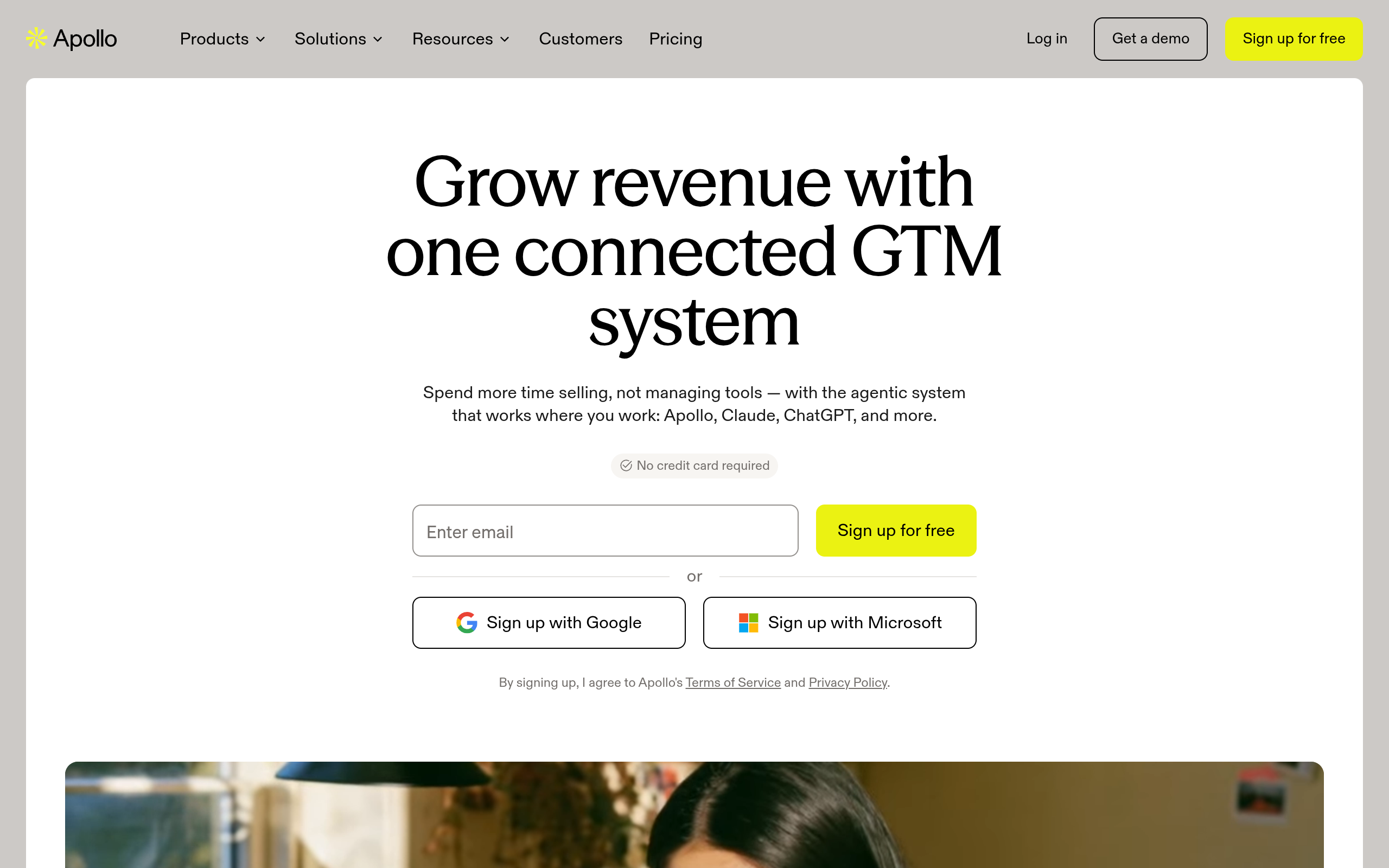
Apollo.io's homepage as of October 2026.
Apollo pairs a contact database with built-in outreach sequencing. Sales teams use its credit system to pull prospect leads and schedule email sequences from a single dashboard.
The self-service setup suits early-stage teams, but contact accuracy can drop outside the tech sector. Credit limits can also become restrictive as outreach volume expands.
Best for: Sales teams that want an all-in-one sequencer paired with entry-level contact data.
ZoomInfo
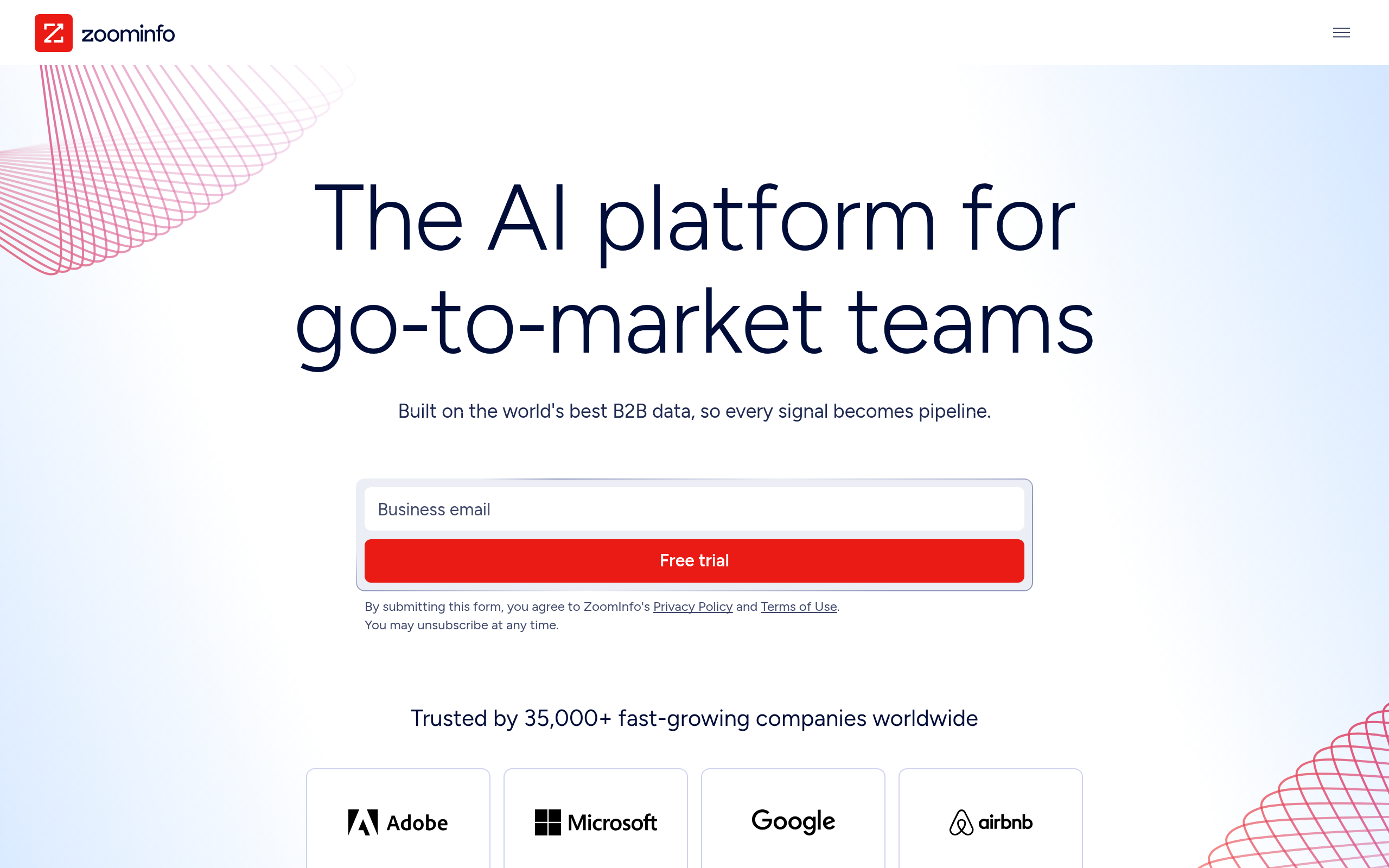
ZoomInfo's homepage as of October 2026.
ZoomInfo provides enterprise-level data and deep account intelligence. Revenue teams typically rely on its organizational charts and intent signals to map large corporate accounts.
The main hurdle is the contract size. Multi-year agreements and five-figure annual minimums make the platform impractical for agile teams testing lean outbound workflows.
Best for: Large enterprise sales organizations with dedicated enterprise procurement budgets.
| Platform | Database Scale | Access Model | Ideal Team Size |
|---|---|---|---|
| go4database | 400M+ business records | Direct download and flexible plans | Freelancers, SMBs, and growth teams |
| Apollo.io | 275M+ contacts | Credit-based sequencing subscription | Individual SDRs and small tech teams |
| ZoomInfo | 300M+ enterprise profiles | Annual enterprise contract | Large enterprise sales teams |
TL;DR:
Successful B2B email lists require verified, compliant contact data rather than unverified scrapes.
Our database gives teams direct access to verified decision-maker emails, direct phones, and LinkedIn profiles. That comes without locking them into rigid five-figure enterprise contracts.

Build Your List With Verified Contacts
Access verified B2B contact data from Go4Database to reach responsive decision-makers without bouncing emails.
B2B Email Marketing Best Practices to Improve Engagement
Engagement in email marketing b2b lead generation depends on inbox placement rather than subject line tricks. Apple Mail Privacy Protection inflates open rates, which makes click-through rate the true engagement signal.
B2B emails average a 3.18 percent click-through rate compared to 2.09 percent in B2C (DMA UK, 2024). Reaching that benchmark starts with proper domain configuration.
Isolate your primary business domain from outbound campaigns by using secondary lookalike domains. Configure each with SPF to identify authorized mail servers, DKIM to verify sender authenticity, and DMARC to handle unverified mail.
Warm up new inboxes slowly. Start at 15 messages daily before scaling toward 50 messages per inbox over four weeks.
Message formatting matters just as much. Clean plain-text layouts reach primary mailboxes reliably, whereas complex HTML templates and redirect links trigger corporate spam filters.
TL;DR:
Protect your inbox placement by configuring technical DNS records and maintaining plain-text formats.
Sourcing fresh, accurate records from go4database helps keep your bounce rates safely below spam filter trigger points.
How to Create High-Converting B2B Email Campaigns
A cold email asking for an immediate 30-minute demonstration rarely works. Modern B2B buying committees average 11.2 decision-makers and influencers for purchases exceeding $50,000 (Forrester / 6sense, 2026).
Looking at effective b2b email marketing examples, top teams replace aggressive sales pitches with practical insight. Instead of requesting a call, share a two-page summary analyzing recent regulatory or operational shifts affecting their industry.
Automated trigger-based emails generate up to 22 times more revenue per email than bulk broadcasts (Omnisend Benchmarks, 2026). Target economic buyers and frontline operators with distinct message tracks sourced from accurate industry databases.
What is the ideal cold email follow up sequence for B2B prospects
You can pace the campaign over 16 business days across four steps. Send an initial insight on Day 1, followed by a relevant case study on Day 4.
Share an operational checklist on Day 9. Finish with a polite breakup note on Day 16, which frees up your schedule while leaving the door open for future contact.
Reach Active Decision Makers Today
Fuel your next campaign with accurate B2B records from Go4Database to ensure higher open and reply rates.
Email Personalization Strategies to Generate More B2B Leads
Basic merge tags no longer impress buyers. Surveys show 49 percent of marketers use generative AI tools to write messages. Still, 61 percent of business buyers state that robotic copy deters engagement (Litmus / Gartner, 2025).
Average cold outreach reply rates recently fell to 5.8 percent (Belkins B2B Cold Email Response Study, 2024). Modern b2b email marketing relies on account-level context rather than superficial flattery.
Segment target accounts by industry pain points, installed software tools, and active job openings rather than generic job titles alone.
Account-based marketing email cadences generate 2.6 times more pipeline ROI per marketing dollar than untargeted blasts (ABM Leadership Alliance / Demandbase, 2026).
End your messages with a low-friction question. Ask whether solving that specific operational bottleneck is a priority for their team this quarter.
Pro tip: Reference a specific tech tool or workflow challenge in your opening line to prove your message was written for their exact operational context.
TL;DR:
Superficial mail-merge fields do not convince skeptical buyers.
Pair tight firmographic segmentation from go4database with specific operational problems to generate replies that turn into sales calls.
How to Measure B2B Email Marketing ROI and Conversions
Pipeline revenue matters far more than open rates. The median conversion rate from marketing qualified leads to sales opportunities slipped to 9.8 percent (Forrester / Demand Gen Report, 2026).
Track inbox placement rather than simple delivery figures, because delivered messages can still land in spam. To calculate true acquisition costs, divide data expenses and software subscriptions by booked sales conversations.
For teams evaluating b2b email marketing services and prospect intelligence, reviewing go4database pricing plans helps map contact costs across multiple seats. Predictable data expenses protect your outbound unit economics as campaign volume scales.
What is a good reply rate for B2B sales email campaigns
Generic cold email blasts rarely perform well. Industry estimates suggest response rates linger well below two percent.
By comparison, well-targeted outbound campaigns using verified prospect data regularly achieve positive reply rates roughly between six and twelve percent. Higher response rates come from addressing verified decision-makers who actually experience the operational problem you solve.
Improve Your Email Campaign Return
Lower acquisition costs and boost overall ROI by sourcing verified B2B contact data directly from Go4Database.
The Missing Piece: Diagnosing Your Outreach Bottleneck
Before rewriting your email copy or purchasing another sales tool, audit where your pipeline process actually stalls. A broken campaign usually stems from one clear issue.
If your bounce rate climbs above roughly two percent, stop sending immediately. Validate your contacts using go4database before mailbox providers restrict your domain.
If your messages land in primary inboxes but yield no replies, the issue is message relevance. The copy is likely focusing on product features rather than immediate buyer headaches.
Refining your b2b email marketing strategies comes down to steady testing of data quality and relevance. You can test your outbound engine through the go4database free trial or choose an active plan to test a focused fifty-prospect campaign this week.
Frequently Asked Questions
You might have these questions in your mind?