On this page 6 sections
- 1. Klaviyo vs Mailchimp: Key Features and Differences in 2026
- 2. Klaviyo vs Mailchimp Pricing: Which Platform Offers Better Value
- 3. Email Marketing Automation: Klaviyo vs Mailchimp Compared
- 4. Klaviyo vs Mailchimp for Ecommerce, Small Businesses, and B2B Marketing
- 5. the Two Platforms: Which Email Marketing Platform Should You Choose
- Aligning Your Platform to Your Growth Engine
You can have thousands of subscribers in an email list and still struggle to generate predictable revenue. Many founders assume choosing an email platform is just about comparing design templates or picking the cheapest tier.
Klaviyo vs Mailchimp is the comparison between two major email marketing platforms to help businesses choose the right software. Mailchimp functions as a broad marketing platform for general small businesses, whereas Klaviyo specializes in advanced, data driven automation for ecommerce brands seeking higher revenue through targeted segmentation in 2026.
Then the first monthly invoice arrives with surprise contact overages. Worse, an automated compliance filter flags your account because you imported a list of prospective business partners without clear proof of opt-in consent.
Evaluating Klaviyo vs Mailchimp is the process of comparing two leading marketing platforms on data architecture, sending compliance, and automation workflows.
While both manage customer journeys, they operate as opt-in retention engines rather than cold outbound tools. Teams needing prospect discovery often pair them with verified contacts via go4database to fuel separate outreach funnels.
Neither tool functions effectively as a catch-all outbound mailer under strict inbox standards enforced through 2026. Understanding where each platform excels will save your team from expensive migrations and unexpected deliverability issues.
1. Klaviyo vs Mailchimp: Key Features and Differences in 2026
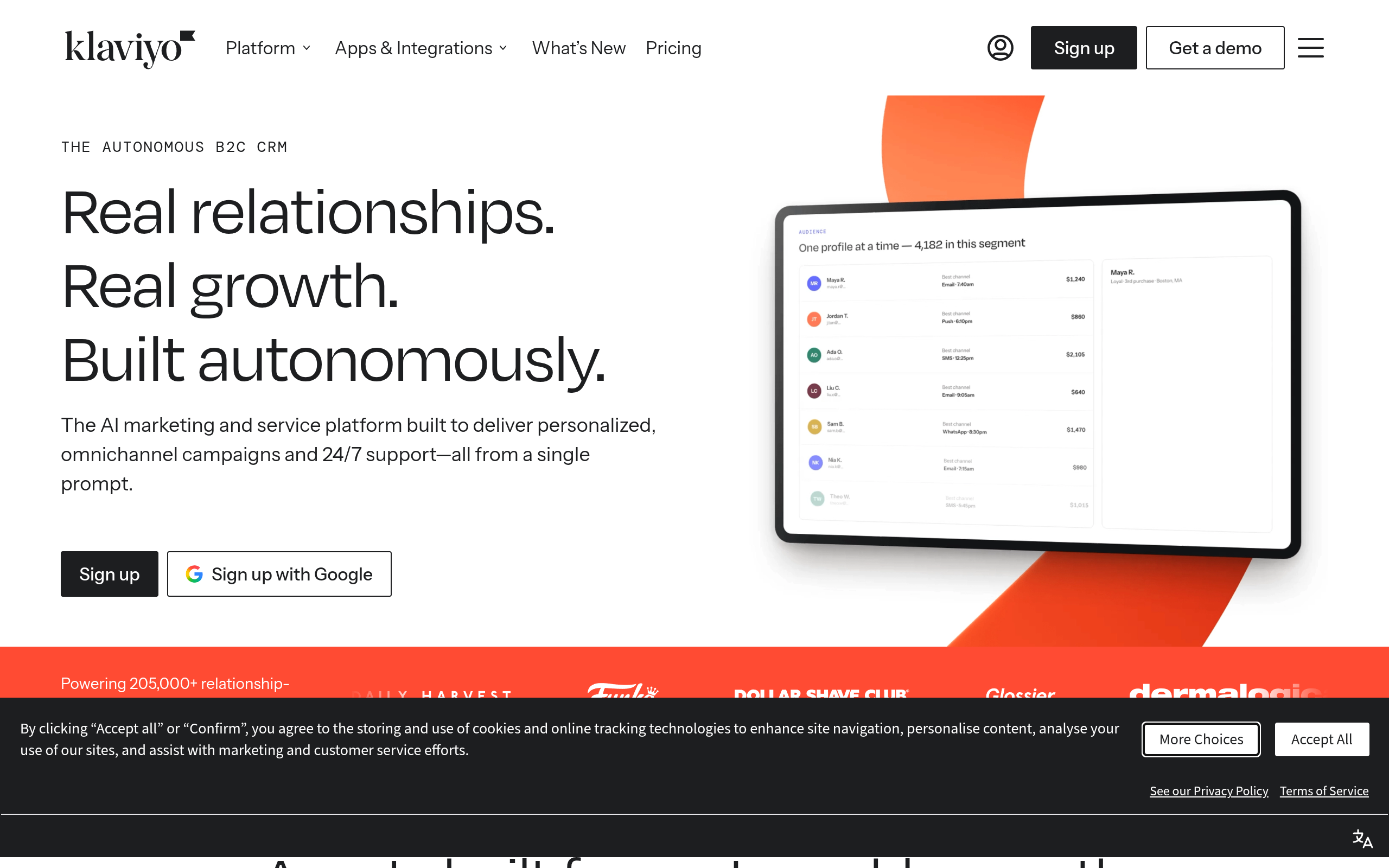
Klaviyo's homepage as of October 2026.
Structural differences shape how both systems manage subscriber identities and deliver campaigns. In practice, choosing between klaviyo or mailchimp comes down to your underlying data structure rather than visual template libraries.
Mailbox providers enforce strict deliverability standards. Under Google Sender Guidelines and Yahoo Postmaster Standards, bulk senders must keep spam complaints below 0.10% and avoid hitting 0.30%.
Both providers also require SPF authentication, DKIM signatures, and DMARC alignment to prove message authenticity. Senders must implement the RFC 8058 one-click unsubscribe header standard across commercial messages.
On entry-level tiers, both platforms place accounts on shared IP pools. If neighboring accounts send low-quality blasts and generate high spam complaints, everyone sharing that sending IP can experience lower inbox placement.
Klaviyo
Klaviyo is built around ecommerce data and automated messaging. It connects individual customer profiles to browsing history, past purchases, and checkout events to trigger automated campaigns.
According to Klaviyo Product Documentation, the platform provides real-time event tracking, predictive customer modeling, and unified consent records across email and SMS. Its segmentation filters evaluate revenue data and page views within seconds.
The main drawback is the pricing curve, which climbs quickly as contact lists expand. Klaviyo's Acceptable Use Policy also strictly prohibits third-party, scraped, or rented contact lists.
That structure works best for direct-to-consumer ecommerce brands. It suits teams that rely heavily on store purchase events and dynamic behavioral triggers.
Mailchimp
Mailchimp, an Intuit company, takes a broader all-in-one approach. It helps small businesses create newsletters, landing pages, and customer journeys, focusing on general marketing accessibility and multi-channel templates.
As outlined on the Mailchimp Pricing Portal, the platform provides visual customer journey builders, audience tagging, and cross-channel scheduling. The drag-and-drop campaign editor remains easy to navigate for solo operators.
There is an important drawback in the billing structure. Mailchimp charges for unsubscribed and non-subscribed contacts retained in audiences unless they are archived. Its compliance systems may also restrict accounts importing unverified lists.
Mailchimp fits small business owners, local service providers, and content creators well. It gives them an accessible newsletter builder designed strictly for opted-in subscribers.
Pro tip: Regularly archive unsubscribed contacts in your audience lists so you never pay monthly platform fees for records you cannot legally email under the FTC CAN-SPAM Compliance Guide.
Choosing between Klaviyo and Mailchimp comes down to whether your campaigns rely on real-time store events or broader newsletter marketing. Keep in mind that neither platform allows unverified third-party lists.
Teams targeting cold prospects can use go4database to gather verified decision-maker records. That keeps outbound workflows compliant before you sync converted leads.
2. Klaviyo vs Mailchimp Pricing: Which Platform Offers Better Value
Comparing entry-tier advertised rates rarely reveals what you will actually pay each month. Both platforms charge for stored contacts rather than simple send volume, creating distinct cost traps as lists expand.
Mailchimp bills customers based on total audience contacts. Subscribed, non-subscribed, and unsubscribed contacts all count toward monthly pricing tiers unless permanently deleted or archived. Inactive subscribers quietly push you into higher payment tiers.
Klaviyo bills accounts based on total active profiles. That means any contact capable of receiving email counts, including shoppers who abandoned checkout without completing marketing opt-in forms. Stored contacts determine base costs before adding SMS credits.
Mailchimp reduced its free tier to a maximum of 250 contacts and 500 monthly email sends, with a daily cap of 250 emails. It also completely removed automated journeys from free accounts.
Mailchimp Standard plans start at $20 per month for 500 contacts. That cost escalates to $100 per month for 5,000 contacts.
Klaviyo Email plans start at $20 per month for up to 500 active profiles. That jumps to $150 per month at 10,000 profiles and $720 per month at 50,000 profiles. Standard tiers cap monthly sends at 10x the profile allowance.
| Platform | Pricing Model | Starting Price (Verified 2026) | Send Limits on Entry Tiers | Contact Storage Policy | Policy on Third-Party / Purchased Lists |
|---|---|---|---|---|---|
| Klaviyo | Profile-tiered subscription | $20/month (500 active profiles) | 10x active profile allowance | Charges for all active profiles, including unconfirmed checkout abandons | Explicitly prohibits purchased, rented, scraped, or third-party lists under AUP |
| Mailchimp | Contact-tiered subscription | $20/month (Standard, 500 contacts) | Free: 2x; Essentials: 10x; Standard: 12x | Charges for subscribed, non-subscribed, and unsubscribed audience contacts | Prohibits third-party, purchased, scraped, and event attendee lists under AUP |
| Brevo | Send volume subscription | $0 (Free, 300 sends/day) or ~$25/month | Volume-based (unlimited stored contacts) | Unlimited contact storage on standard plans | Strictly opt-in for marketing; allows dedicated transactional and SMTP routing |
| Apollo.io | User seat subscription | $49/user/month (basic paid tier) | Sequence and credit-based outbound caps | Stored B2B records within credit allotments | Built particularly for cold B2B outreach and outbound database filtering |
Evaluating klaviyo mailchimp expenses purely on starting prices misses how quickly billing scales. A list of 20,000 contacts costs hundreds of dollars monthly on either platform, even if you send only one newsletter per month.

Avoid Surprise List Overages on Cold Contacts
Get verified B2B contact lists from Go4Database so you only pay for prospects that actually exist.
3. Email Marketing Automation: Klaviyo vs Mailchimp Compared
Automation workflows show the clearest operational difference between both tools. The practical question is how easily your team can set up a multi-step sequence that responds to customer behavior.
The market looked different during Klaviyo vs Mailchimp 2022 comparisons, when basic automations were standard on free tiers. Today, Mailchimp reserves its customer journey builder for paid plans, using Intuit Assist to generate branch ideas from natural language prompts.
Klaviyo uses an event-first architecture. It tracks discrete customer actions, like viewing a product category or placing an order, and evaluates profile properties in real time to split sequences cleanly.
How do automation workflows differ between Klaviyo and Mailchimp
Mailchimp triggers sequences primarily around list membership, tag updates, and general engagement signals. Its visual journey builder handles conditional branching, but it struggles with complex, multi-event logic across different web properties.
Klaviyo triggers sequences through custom API event payloads and ecommerce webhooks. This setup lets you split nurture paths based on cart contents, historical spend, or real-time website behavior without creating manual audience tags.
Can you use Mailchimp or Klaviyo for cold outreach campaigns
The short answer is no. Neither tool permits cold outreach. Klaviyo's Acceptable Use Policy prohibits uploading or sending to email lists that are purchased, rented, borrowed, third-party owned, or scraped, enforcing account suspension for violations.
Mailchimp has the same rule. Its Acceptable Use Policy prohibits third-party lists, purchased lists, scraped contacts, and attendee lists where contacts did not directly opt in to the specific sending brand.
To enforce this, Mailchimp uses an automated compliance engine that scans imported lists for suspicious patterns before you send.
Pro tip: Always verify your primary company domain on your DNS host before launching campaigns to avoid triggering automated deliverability suspensions.
Klaviyo offers better branching for complex behavioral triggers, while Mailchimp keeps basic multi-step newsletters simple. Neither platform allows cold lists.
If you plan to target new accounts, source verified records from go4database, which states it lists 400M+ global business contacts and 130M+ verified mobile numbers. From there, use dedicated cold sales platforms for acquisition.
4. Klaviyo vs Mailchimp for Ecommerce, Small Businesses, and B2B Marketing
Your business model determines whether you should choose mailchimp or klaviyo, or use another platform entirely. It usually comes down to three common operating setups.
Scenario A: Direct-to-Consumer Ecommerce Stores
If you run an online store with an active catalog, Klaviyo makes immediate sense. Its direct sync with platforms like Shopify handles real-time cart recovery, browse abandonment emails, and back-in-stock alerts.
Built-in revenue attribution also helps merchants see exactly which automated email drove a purchase. For brands selling physical items online, it remains a practical benchmark.
Scale Your B2B Outreach With Clean Data
Go4Database provides verified B2B prospect lists to fuel your outreach without triggering email compliance filters.
Scenario B: Local Small Businesses and Content Creators
Local agencies, service providers, and creators publishing weekly content often find Klaviyo unnecessary. Mailchimp provides an intuitive drag-and-drop builder, appointment booking forms, and simple contact management.
If you only need to send a clean monthly newsletter to registered clients, Mailchimp delivers an approachable workflow without requiring custom technical setup.
Scenario C: B2B Growth and Outbound Lead Generation
Traditional email marketing platforms are built for opt-in audiences, not cold outreach. If you use an inbound provider to message uncontacted prospects, you quickly risk damaging your primary domain reputation.
B2B teams separate these workflows. They run dedicated outbound software on secondary domains to generate pipeline, moving contacts into Klaviyo or Mailchimp only after someone opts in and grants permission.
Apollo.io
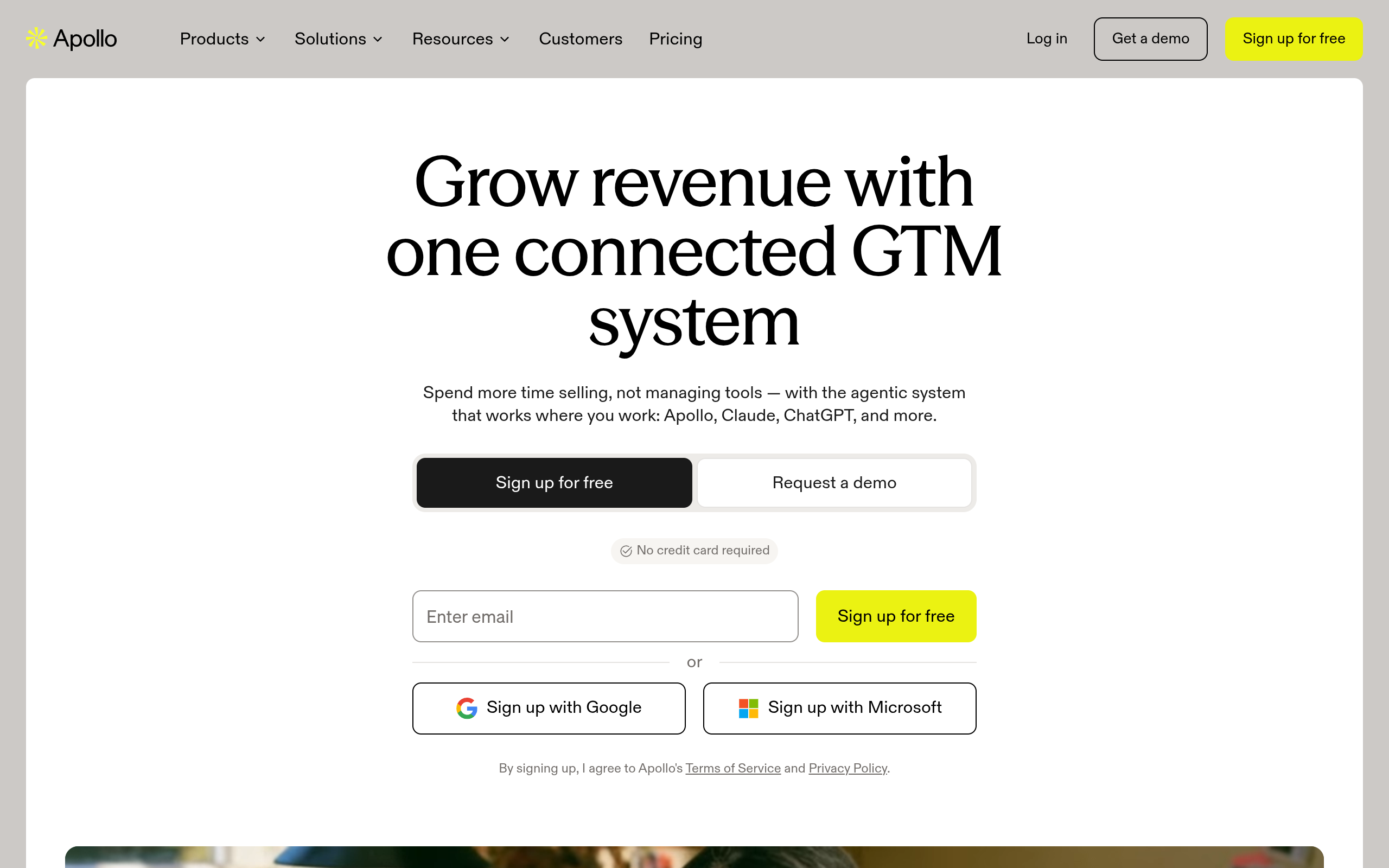
Apollo.io's homepage as of October 2026.
Apollo.io is an outbound sales platform built for B2B pipeline generation. It pairs a large business directory with cold email sequences, dialer tools, and CRM connections.
The built-in directory includes firmographic filters and sequence automation with mailbox warm-up features. That allows sales reps to run cold outreach without violating the strict opt-in rules of traditional email marketing services.
The tradeoff is visual design. Apollo is built for direct, plain-text sales conversations rather than rich-media marketing, so its template options remain very basic compared to newsletter builders.
Instantly.ai
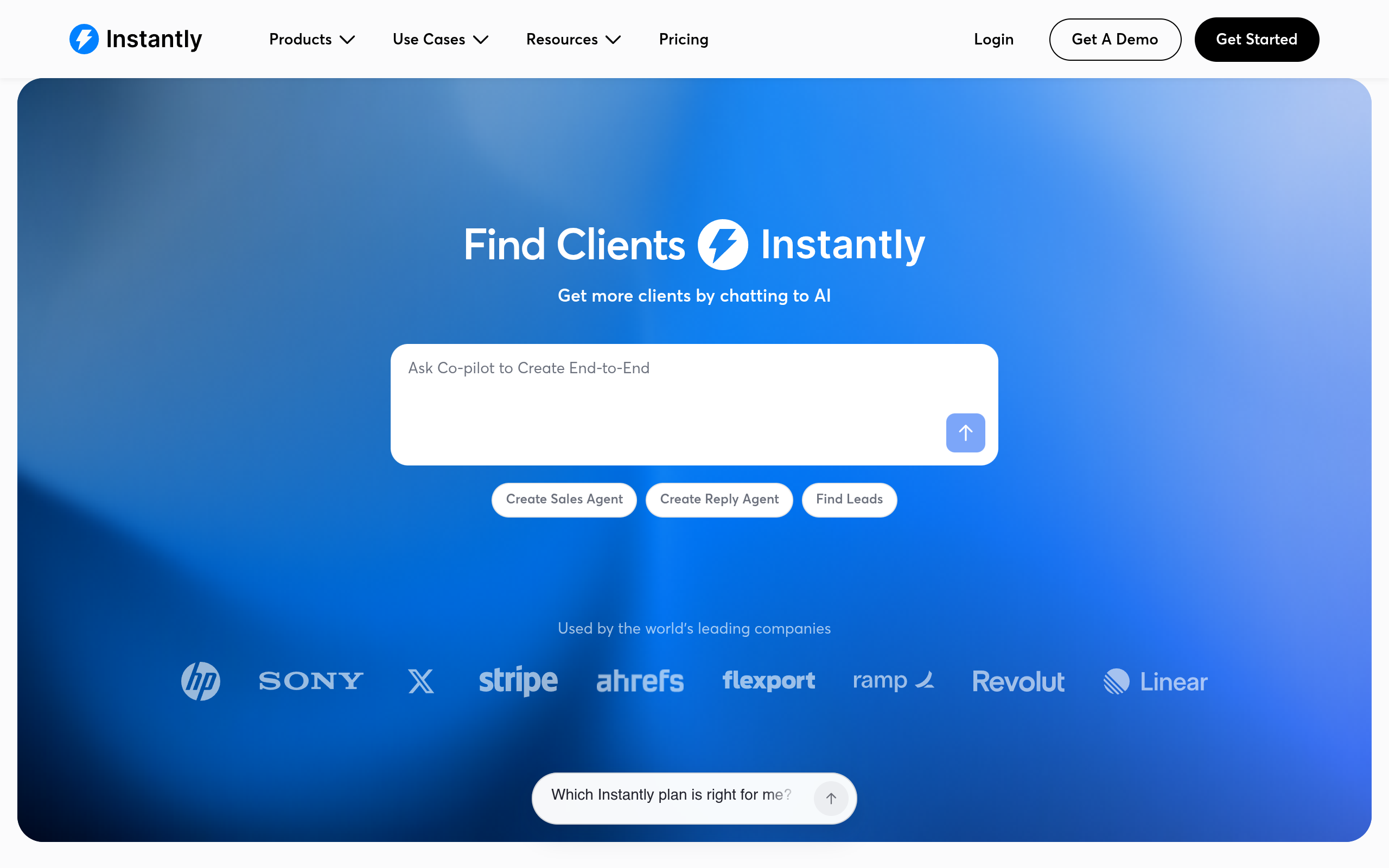
Instantly.ai's homepage as of October 2026.
Instantly.ai is a cold email platform built for outbound deliverability at scale. It offers flat-rate pricing based on workspace features rather than database size, and supports secondary domain rotation.
The system connects multiple sending accounts and includes automated mailbox warm-up routines to build sender reputation. Distributing message volume across secondary inboxes helps protect your primary company domain.
Its main limitation is the absence of visual HTML newsletter builders or ecommerce tracking. It is designed purely for text-based B2B sales conversations.
Brevo
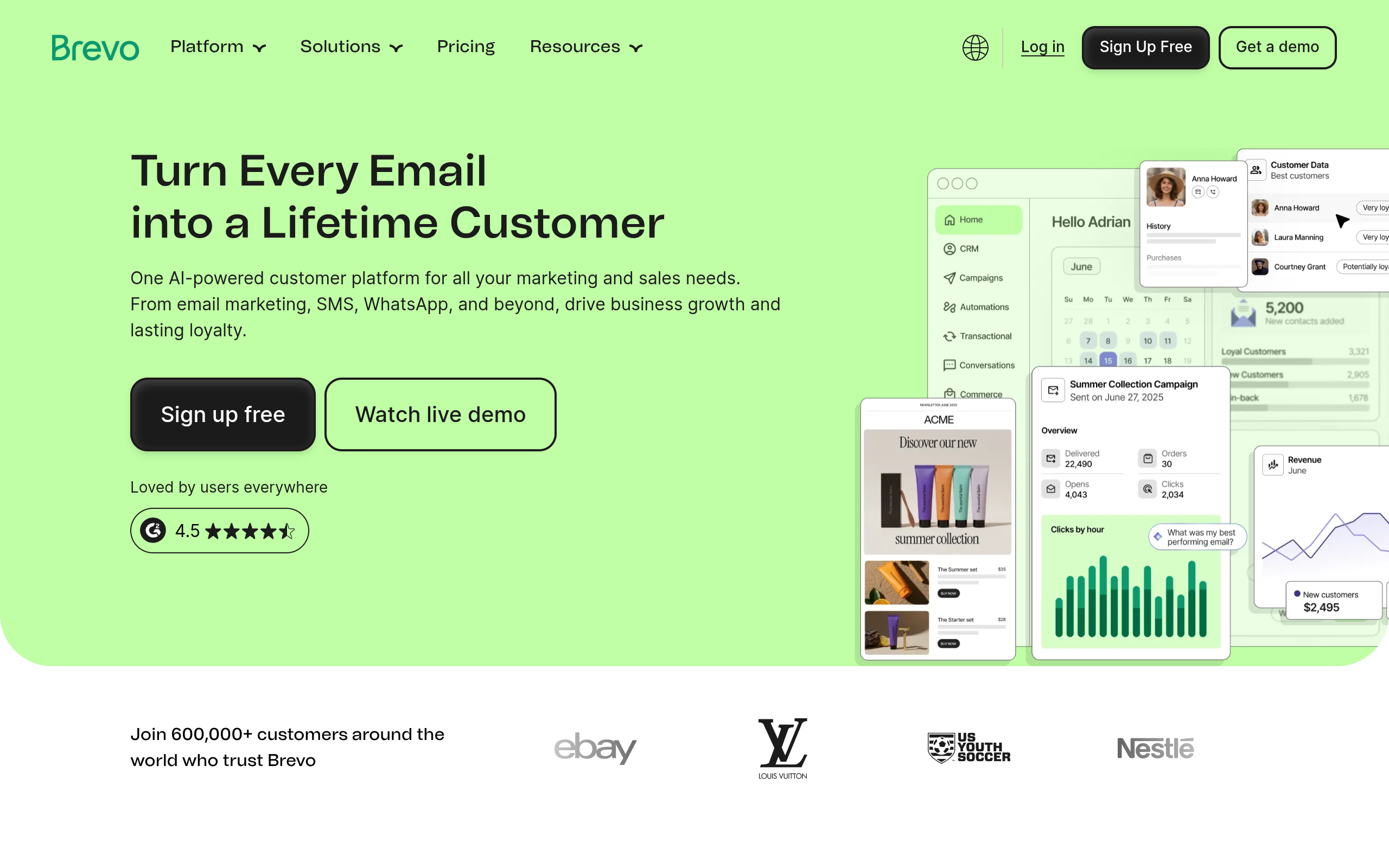
Brevo's homepage as of October 2026.
Brevo (formerly Sendinblue) bills by total email send volume rather than stored contacts. Alongside marketing automation, it includes basic CRM tools and transactional SMTP routing.
That pricing structure substantially lowers monthly costs if you maintain a large audience but only send occasional campaigns. It also provides reliable infrastructure for transactional notifications and receipts.
Like other marketing providers, Brevo requires opt-in consent for promotional broadcasts. It fits cost-conscious teams with large contact lists who care primarily about transactional reliability.
Find Verified Prospects in Your Target Industry
Review verified B2B contact records from Go4Database tailored specifically to your target industry and market.
5. the Two Platforms: Which Email Marketing Platform Should You Choose
The practical answer is that neither platform is universally better. Your decision comes down to your business model, customer data sources, and internal technical capacity.
Choose Klaviyo if you run an ecommerce store on Shopify or WooCommerce where revenue relies on real-time triggers like abandoned carts. Be prepared for higher monthly fees as your profile count grows.
Mailchimp fits consultants, creators, and local service businesses sending regular updates to an opted-in community. Its visual editor simplifies newsletter publishing without demanding complex technical setup.
If you manage B2B outbound prospecting, neither platform fits your initial acquisition workflow. You need clean data infrastructure before launching cold outreach.
An inbound newsletter cannot fix an empty sales pipeline. Teams often source verified decision-maker records through go4database for compliant outbound outreach, bringing interested prospects to website opt-in forms.
According to go4database's site, plans start with a Free Trial providing 100 contacts per month for one year with no card required. Paid options include the Micro Active plan at $59 per month for 3,000 verified contacts across 10 users.
Finding prospects through the go4database pricing portal protects your sender reputation while feeding qualified leads into your marketing engine.
Aligning Your Platform to Your Growth Engine
Software features cannot make up for an unclear strategy. Choosing between these platforms really comes down to your conversion funnel.
Klaviyo fits best when detailed ecommerce event tracking drives your revenue. Mailchimp is the simpler pick if you just need a reliable newsletter tool for opted-in local audiences.
Take time to audit your database and remove unengaged contacts driving up your billing tier. Most importantly, keep cold prospecting data completely separate from your permission-based newsletter platform.
Frequently asked questions
Can I upload purchased B2B email lists into Klaviyo?
Why does Mailchimp charge for unsubscribed contacts?
Does Klaviyo work well for businesses that do not sell physical products?
What spam complaint rate causes deliverability issues in 2026?
How should B2B sales teams run cold outbound email safely?