
You can buy a software seat, set dozens of search filters, and still fail to book sales calls. Many solo founders and sales development reps run into this exact wall every month. Often, teams buy a tool before diagnosing why their outreach is stalling. The real bottleneck might be vague messaging, loose targeting, or restrictive data limits that prevent steady execution. Both platforms surface executive records, but differences in export rules, phone credit multipliers, and deliverability shape your actual return. For some teams, sourcing verified lists directly through Go4Database proves simpler than managing monthly seat limits.
Apollo.io vs RocketReach is a software evaluation comparing a full sales engagement platform with a dedicated contact lookup directory. This comparison matters for B2B sales teams because selecting the right tool determines whether you pay for complex outreach workflows or prioritize accurate direct dial phone numbers and verified email addresses.
In practice, the true financial driver of outbound prospecting is rarely the subscription price. What matters is the real cost per deliverable, exportable record you can actually use.
According to Google Bulk Sender Guidelines, mailbox providers require senders to keep spam complaint rates below 0.10% and avoid reaching 0.30%. Failing to keep contact data clean quickly damages domain reputation.
1. Apollo.io vs RocketReach: Key Differences in Features and Data
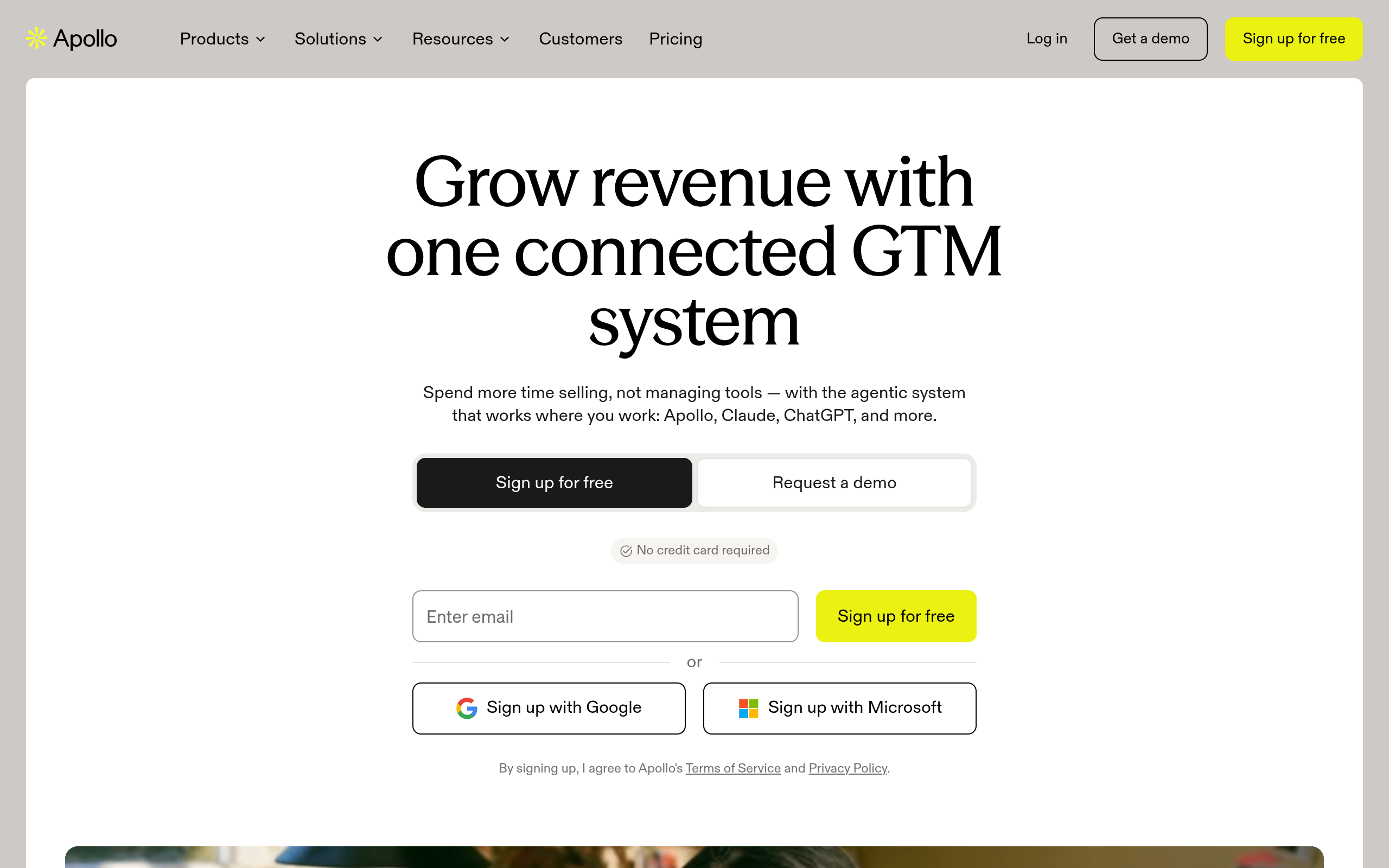
Apollo.io's homepage as of October 2026.
The main difference between these two platforms comes down to what they are built to do. Apollo pairs contact data with sales engagement tools, giving reps email sequences, task management, and dialers in one place.
RocketReach works more like a search index for direct contact details across the open web. It is built for targeted lookups rather than running multi-step outreach campaigns.
Data sourcing also sets them apart. According to Apollo.io Documentation, Apollo maintains a proprietary database of over 275 million contacts and 73 million company profiles.
In contrast, RocketReach Platform Data reports an index of more than 700 million professional profiles and 60 million companies. That data is gathered through open web scraping, public registries, and social profiles.
Apollo puts dialers, email cadences, and pipeline tracking into a single interface. But consolidating point solutions brings practical tradeoffs that affect your software budget.
Recent SMB spending benchmarks from the SpendHound SaaS Index show that Apollo license costs increased by 37.8% year over year as teams attempted to merge multiple tools into one seat.
RocketReach keeps its setup much simpler. Researchers can look up contact details through a browser extension without needing to manage complex cold outreach systems.
Pro tip: Check whether your sales reps require daily email sequencing tools inside their database or simply need clean contact records exported directly to a spreadsheet.
When comparing RocketReach vs Apollo, your day-to-day workflow matters most. You can explore our detailed Apollo.io review to evaluate campaign workflows, or check what is Apollo.io to see how the database works.
TL;DR:
RocketReach excels at quick, individual contact lookups across a massive scraped index. Apollo combines data discovery with multi-step email sequencing. Sourcing ready-to-use lists from Go4Database offers a direct path to verified decision-maker records without recurring seat fees.
2. Apollo.io vs RocketReach Pricing: Plans, Costs, and Value
Plan structures between both vendors reveal very different cost drivers. On annual terms, the Apollo.io Pricing Page lists Basic at $49 per seat monthly (30,000 credits yearly) and Professional at $79 (48,000 credits yearly).
Apollo also lists an Organization tier at $119 per seat monthly with a mandatory three-seat minimum. Choosing monthly billing increases those rates to $65, $99, and $149 per seat.
RocketReach prices by search lookups rather than pooled platform credits. According to the RocketReach Pricing Page, monthly billing is $49 for Essentials (100 email lookups), $99 for Pro (250 lookups), and $209 for Ultimate (1,000 lookups).
Annual equivalents run $329, $829, and $1,699 per year. User reports on G2 () note that team plans require custom annual agreements that often start around several thousand dollars annually.
The real economic difference lies in credit consumption. Apollo.io Credits Documentation notes that revealing an email costs one credit, but uncovering a direct dial or mobile number takes eight credits.
Unused credits expire at the end of each billing cycle without rollover. A sales rep searching heavily for mobile numbers will burn through their monthly allowance eight times faster than planned.
RocketReach creates a different bottleneck through export restrictions. As outlined in RocketReach Documentation, annual plans offer unlimited searches under fair-use guidelines, but they place hard limits on external file exports.
Annual export allowances are capped at 1,200 records on Essentials, 3,600 on Pro, and 20,000 on Ultimate.
A solo user paying $829 annually for Pro can export only 3,600 contacts into a CRM, pushing the effective export cost to roughly $0.23 per usable contact.
For deeper plan comparisons, review the detailed breakdown of Apollo pricing alongside the companion guide on RocketReach pricing.
| Operational Metric | Apollo.io | RocketReach |
|---|---|---|
| Pricing Model | Per-seat subscription with monthly credit allocations | Per-seat subscription with lookup and export caps |
| Starting Self-Serve Price | $49/mo per seat (billed annually) or $65 billed monthly | $49/mo (billed monthly) or $329/yr billed annually |
| Credit Rollover Policy | No rollover; credits expire at end of each billing cycle | Unused monthly credits expire; annual plans cap total exports |
| Phone Number Cost | Consumes 8 credits per direct dial reveal | Included in Pro and Ultimate; excluded from Essentials |
| Export Restrictions | Bound by monthly export allowance tiers | Annual plans strictly capped at 1,200 to 20,000 records/yr |
| Failed Lookup Handling | Credit deducted upon revealing database entry | Automatic credit refund if search returns no verified data |
| Multi-Seat Entry Floor | Free and lower tiers 1-seat; Organization requires 3 seats | Team plans require custom sales agreements |
TL;DR:
RocketReach annual plans cap CSV exports despite promoting unlimited searches. Apollo applies an 8x multiplier for phone reveals and wipes unused credits monthly. Direct list purchases from Go4Database bypass credit expiration entirely.
3. Contact Database Comparison: Email Accuracy and Phone Numbers
Data freshness depends directly on collection methods. Apollo relies on a contributor network combined with web scrapers, updating records as connected user inboxes sync CRM information.

Get Accurate Lists Without Monthly Seats
Buy verified B2B contact data from Go4Database to reach prospects directly with accurate phone numbers and emails.
RocketReach builds its database by crawling public websites, company registries, and professional profiles. That approach creates a broad footprint, but it can sometimes retain legacy positions.
That broad scraping introduces deliverability risks for outbound teams. Deliverability audits from Modern Inbound Outbound Benchmarks show that unscrubbed RocketReach lists can carry bounce rates between 15% and 25%.
Much of that bounce risk is driven by catch-all domains and personal addresses. Catch-all domains accept all inbound messages initially, making it difficult for standard verification tools to determine if a specific inbox actually exists.
Pro tip: Separate personal webmail addresses from corporate records before launching cold sequences to reduce manual spam reports and comply with regional privacy standards.
Consumer webmail addresses, such as Gmail or Yahoo mailboxes, show up frequently inside RocketReach results. Cold pitching a personal inbox brings genuine compliance risks under European GDPR regulations.
Recipients who get unsolicited business pitches in personal inboxes tend to mark them as spam. Over time, that reaction puts your root domain reputation at serious risk.
Phone numbers also follow different rules across the two tools. The RocketReach In-App Help Center notes that the platform refunds a lookup credit if a search query fails to return verified contact details.
However, mobile dials remain completely unavailable on the RocketReach Essentials plan. Apollo includes mobile data on all paid tiers, but a team on its Basic plan (2,500 credits monthly) runs out after uncovering only 312 direct dials.
Data accuracy also decays quietly over time. Research from Gartner (2020) suggests B2B contact lists decay at roughly 2% to 3% each month as professionals change roles or leave companies.
Safe outreach requires scrubbing records with real-time SMTP handshakes or buying pre-cleansed data. Teams targeting technical buyers often secure verified lists like IT decision makers data or specialized HR decision makers contact database files to keep bounce rates down.
TL;DR:
RocketReach delivers expansive coverage but carries higher bounce risks on scraped records. Apollo provides cleaner B2B addresses alongside an 8x phone credit multiplier. Pre-verified contact files protect sender reputation effectively.
4. Apollo.io vs RocketReach for B2B Lead Generation and Sales
Many teams assume an entry-level seat handles everything outbound requires. In reality, Apollo's Basic plan limits email dispatch to 250 sends per day from a single mailbox.
Scaling cold outreach safely often means spreading volume across secondary domains. That setup usually requires upgrading to higher tiers or connecting external sending software.
Daily workflows highlight clear operational differences between the two platforms. RocketReach fits recruiters, executive search consultants, and PR professionals who need direct contact details for specific individuals without managing ongoing campaigns.
Apollo fits dedicated sales teams running multi-step outbound workflows. Reps can build lists using technographics and buying signals, enrich CRM contacts, and launch email cadences from one dashboard.
Running lean means avoiding tools you pay for but never use. Startups often buy platform seats, ignore the complex sequence features, and hit export credit limits on basic lists almost immediately.
TL;DR:
RocketReach serves ad-hoc executive and recruitment lookups, whereas Apollo powers coordinated outbound sales workflows. Lean teams gain operational flexibility by separating prospect data acquisition from their sending software.
5. Best Apollo.io and RocketReach Alternatives for Prospecting
Neither Apollo nor RocketReach is the only option for building a predictable sales pipeline. Looking at alternatives shows how different vendors handle data accuracy, enrichment workflows, and platform costs.
Apollo.io
Apollo.io combines a database of 275 million contacts with native email cadences and CRM enrichment. That allows sales reps to identify target accounts and manage outreach from a single workspace.
The platform brings contact sourcing, sequences, and dialers together under one login, with detailed filtering for company technology usage. It also provides a basic free tier for testing simple queries.
There are trade-offs to plan for. Unlocking mobile direct dials consumes eight credits each, entry plans enforce daily sending caps, and unused monthly credits expire without rollover.
You can see how these trade-offs compare in our breakdowns of Apollo.io vs Lusha and Apollo.io vs Cognism.
Get Direct Dials Without Credit Multipliers
Go4Database provides verified B2B contact data with direct phone numbers so you avoid steep software credit penalties.
RocketReach
RocketReach functions primarily as a contact search engine. According to platform disclosures (), it indexes more than 700 million professional profiles gathered across the public web.
It works best as an ad-hoc lookup tool. When you search for a profile, it returns personal emails, corporate addresses, and social profile links.
The main advantages include an expansive global directory for technical roles and niche industries, a fast browser extension, and automatic credit refunds on unverified searches.
The tradeoffs are worth noting. Self-serve plans carry strict annual export limits, personal webmail addresses appear frequently, and you get no built-in cadence tools.
For an enterprise comparison, see the guide on RocketReach vs ZoomInfo.
ZoomInfo
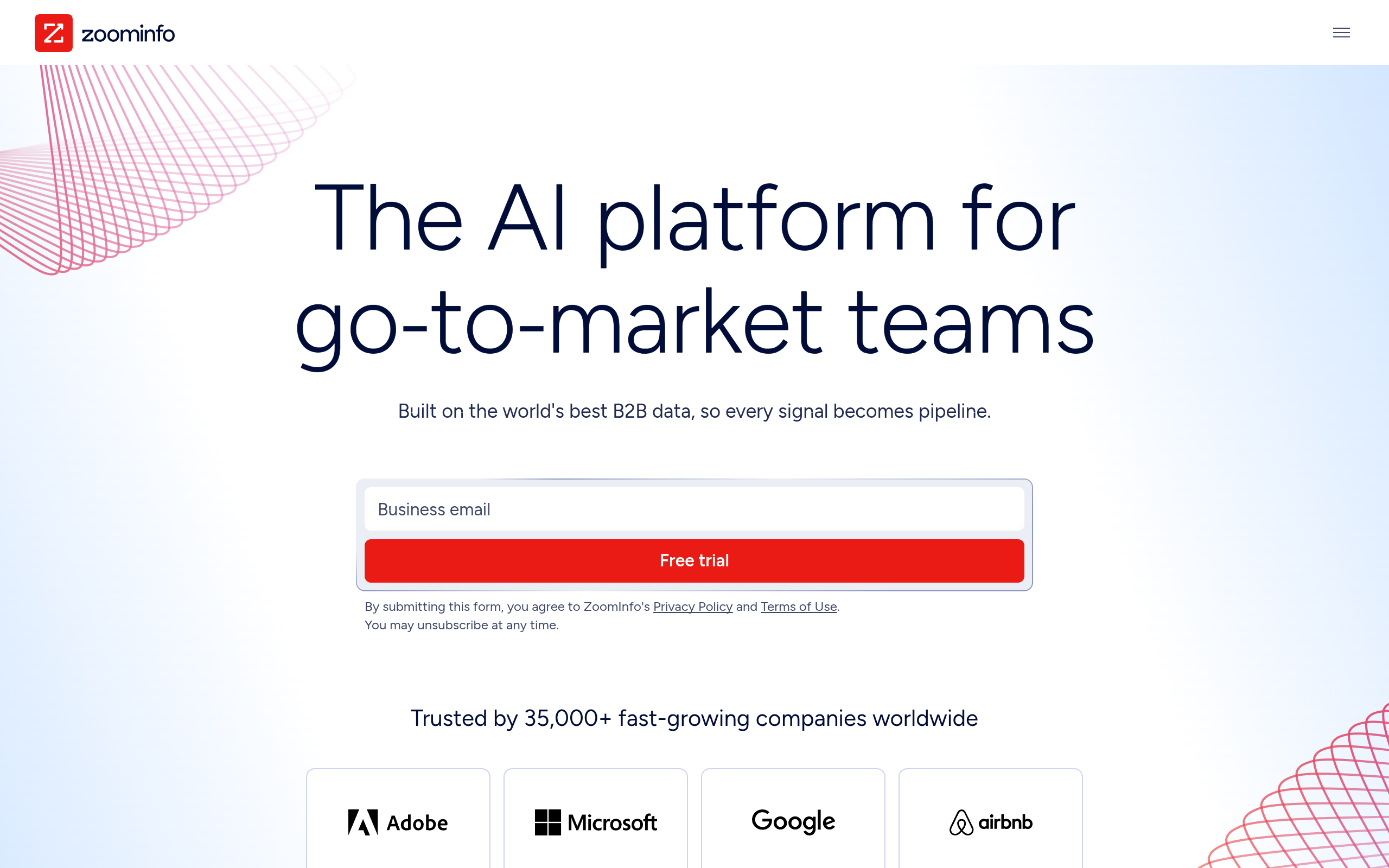
ZoomInfo's homepage as of October 2026.
ZoomInfo provides deep organizational charts, buyer intent signals, and broad mobile phone coverage. It is built primarily for mid-market and enterprise teams running structured outbound workflows.
The platform pairs verified direct dials with account-level intent data. However, software pricing benchmarks published by Vendr () indicate that ZoomInfo enterprise contracts typically start above $15,000 per year with strict renewal terms.
Before committing, evaluate the contract structure carefully. You can review ZoomInfo pricing directly, or see how the platform compares in Apollo vs ZoomInfo.
Clay
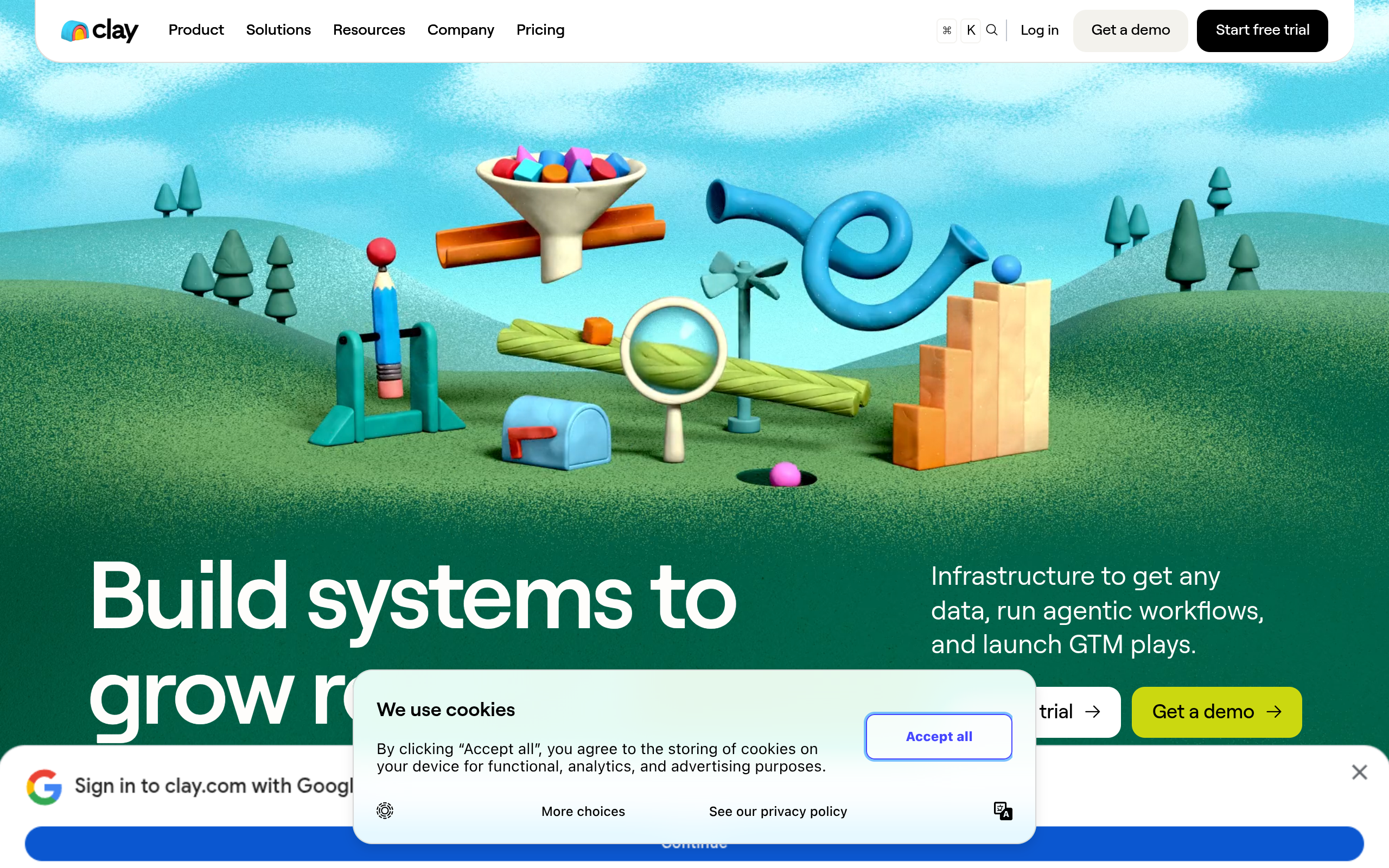
Clay's homepage as of October 2026.
Clay works as a data orchestration and waterfall enrichment platform, connecting to dozens of third-party data providers. Marketers use its automated research tables to build custom prospecting lists.
In simple terms, waterfall enrichment queries backup databases sequentially when primary sources fail. That step-by-step process improves match rates and helps locate verified contact details across niche segments.
The main drawback is complexity. Non-technical users face a steep learning curve, and credit consumption can climb unpredictably during complex multi-provider lookups.
UpLead
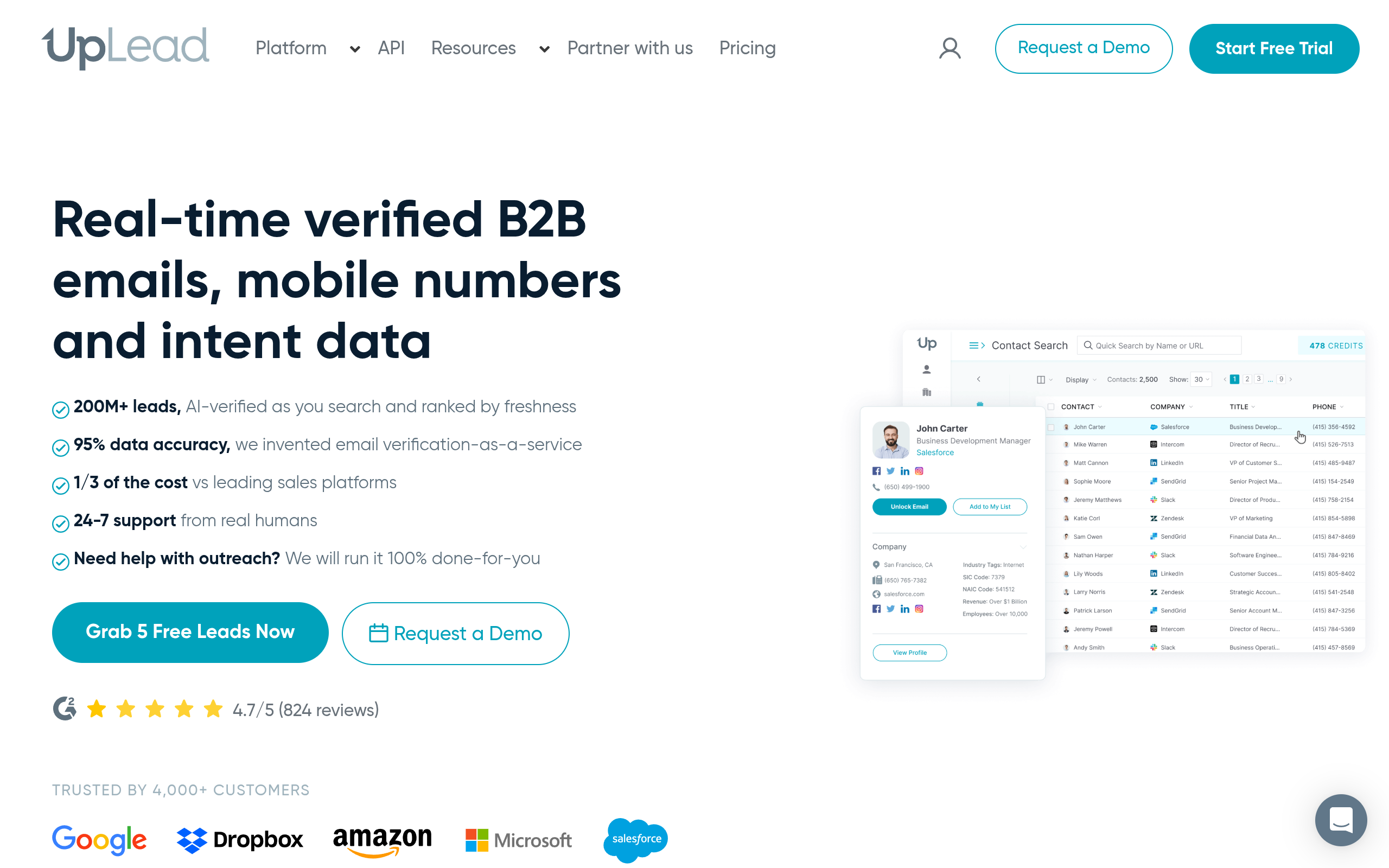
UpLead's homepage as of October 2026.
UpLead focuses on verified contact accuracy by running real-time SMTP checks on email addresses before deducting any user credit. To protect domain safety, the platform backs its records with a stated 95% data accuracy benchmark.
There is an important tradeoff. UpLead maintains a smaller total contact database than Apollo or RocketReach, alongside a higher starting cost per contact on entry-level monthly subscriptions.
Lusha
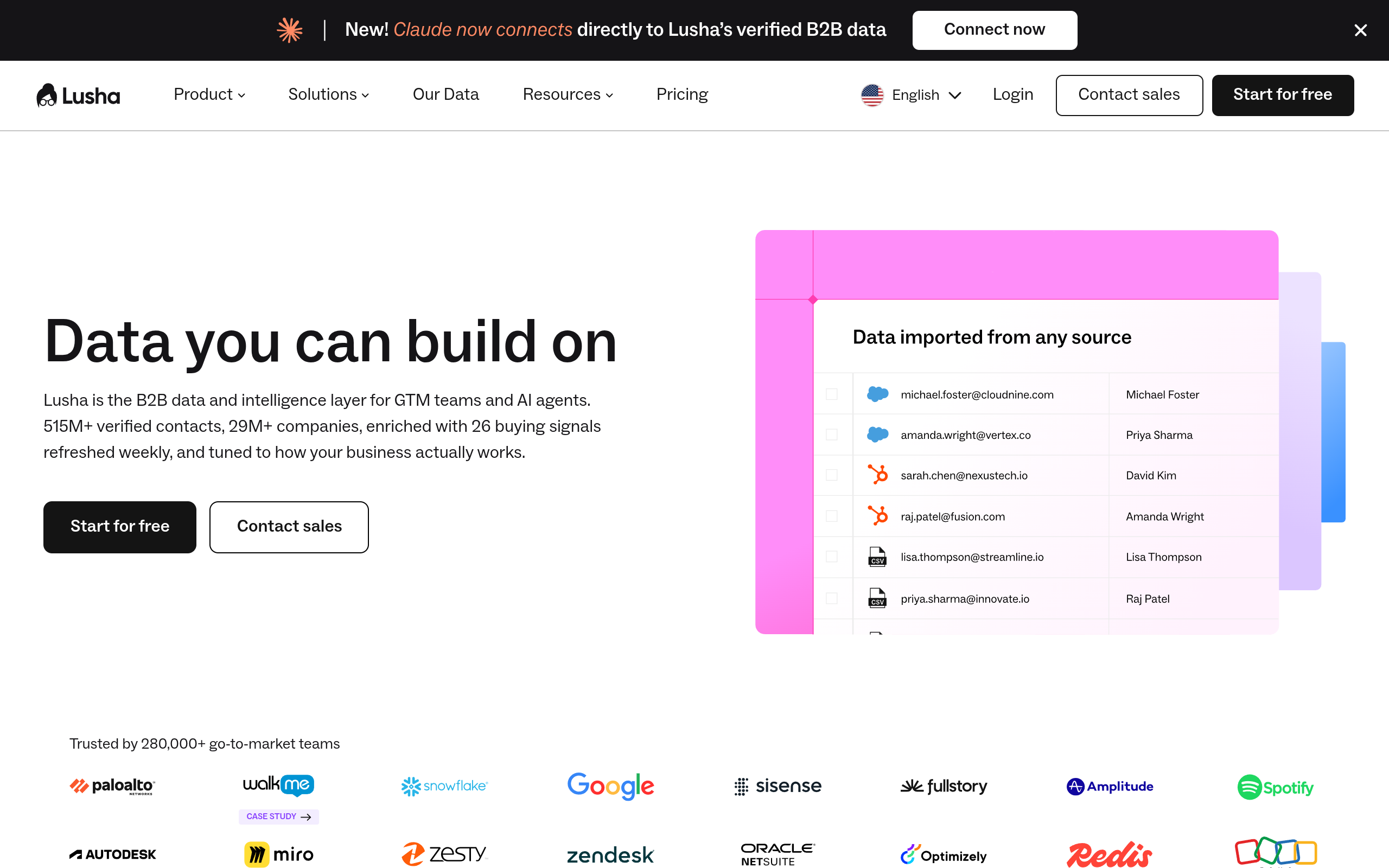
Lusha's homepage as of October 2026.
Lusha focuses on direct-dial phone numbers and corporate emails, mostly delivered through a browser extension. It places a heavy emphasis on European privacy standards.
Match rates for direct dials are generally solid across mid-sized businesses. A detailed breakdown is available in the overview of Lusha pricing.
The practical tradeoff is cost per credit. Lusha also offers fewer advanced company search filters than dedicated enterprise databases provide.
Own Contact Records Without Credit Forfeiture
Purchase verified B2B contact data from Go4Database once and keep your records permanently without monthly credit expiration.
Go4Database: Direct Data Ownership Without Platform Lock-In
For founders, freelancers, and sales teams seeking to avoid ongoing software fees, Go4Database provides an alternative centered on direct list ownership. Instead of managing recurring subscriptions with expiring credits, teams purchase verified contact lists directly.
According to Go4Database's site, the database lists more than 400 million business contacts and 130 million verified mobile numbers. It also includes complete LinkedIn profile links across 845 B2B categories and 9,000+ industries.
Operating since 2012 with over 22,000 contracts signed, Go4Database provides straightforward entry pricing. That starts with a Free Trial ($0 for 100 contacts/month, 1 year free, no card required).
Paid options include Nano ($35/mo for 1,500 contacts/month). Teams needing more volume can use the Micro Active plan ($59/mo for 3,000 contacts/month across 10 user seats), backed by a 30-day money-back guarantee.
Purchasing data directly avoids recurring platform friction. Your team simply downloads verified records into your preferred sales engagement tools without worrying about credit burn rates, seat minimums, or artificial export caps.
The Missing Piece: Decoupling Data Sourcing from Outbound Infrastructure
Before committing to an annual contract with Apollo, RocketReach, or any enterprise alternative, evaluate your current outbound setup. Often, sales teams struggle with weak messaging or degraded sending domains rather than a shortage of contacts.
Decoupling your contact data from your sending software also offers practical advantages. When you purchase verified prospect files from a dedicated source like Go4Database, you retain complete ownership of your contact records.
That separation helps protect your domains against provider spam thresholds. It also shields your sales pipeline from unpredictable subscription price increases over time.
Frequently Asked Questions
You might have these questions in your mind?