
You can purchase access to millions of business contacts and still watch your sales reps miss quota. When cold calls hit dead switchboards or emails bounce into spam traps, software seat licenses quickly turn into expensive clutter. Apollo.io vs Lusha compares an all-in-one sales platform with a focused contact enrichment tool. While each supports B2B pipelines, many teams turn to providers like Go4Database for verified phone and email lists without recurring credit traps. Choosing between them comes down to real deliverability, direct-dial reliability, and true operational costs. The practical difference shows up in how both platforms perform under actual sales conditions.
Apollo.io vs Lusha is a direct comparison between a comprehensive sales intelligence platform and a targeted contact enrichment extension. This comparison matters because choosing the right database impacts sales pipeline efficiency, data accuracy, credit expiration rules, and total operational costs across your outbound team.
1. Apollo.io vs Lusha: Key Features and Database Comparison
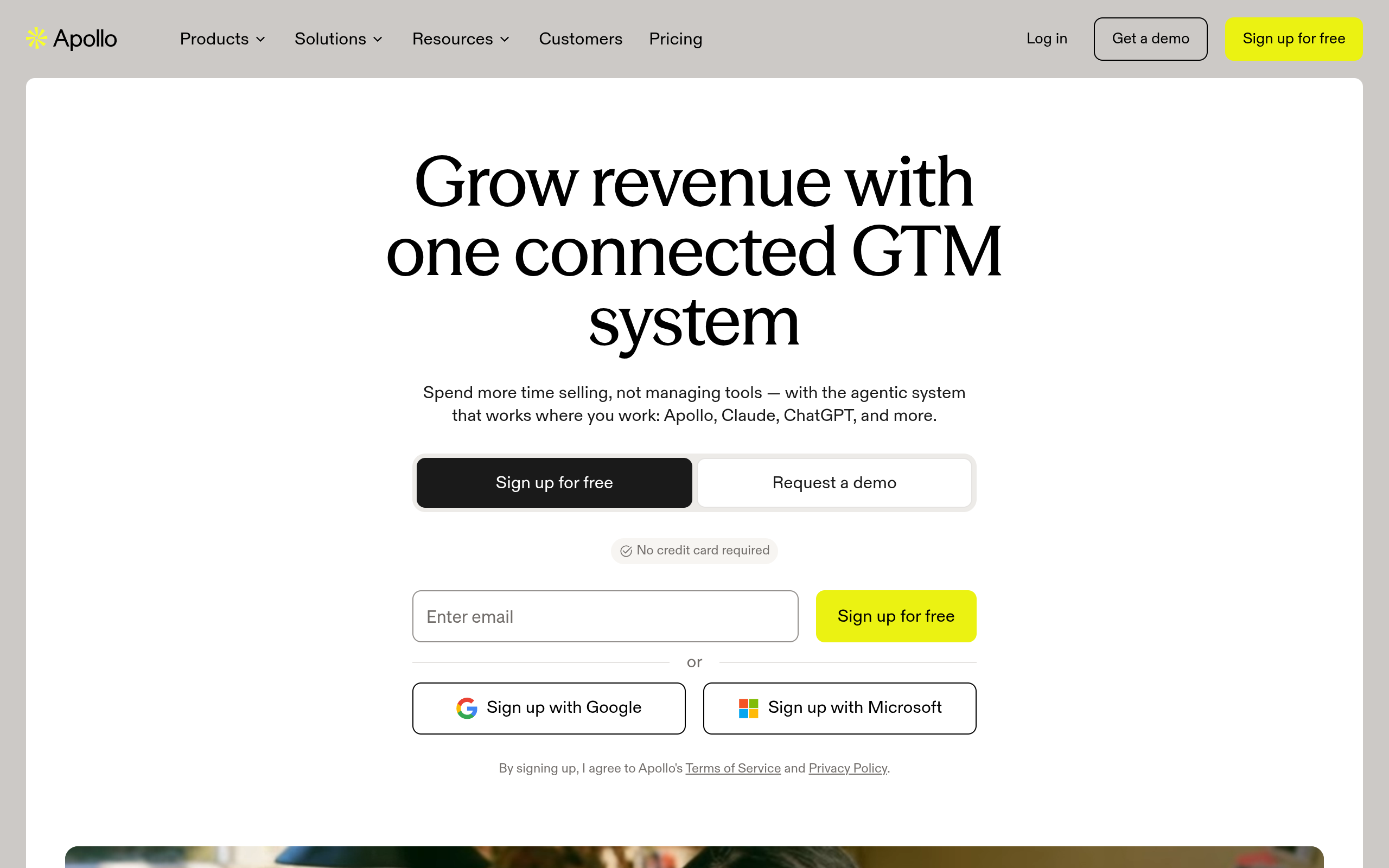
Apollo.io's homepage as of October 2026.
Apollo operates as an all-in-one sales platform, while Lusha focuses on fast prospect enrichment. Research from Bloomberry recently found Apollo listed as a core requirement in roughly 29% of technical sales job postings.
Recent compliance updates have also shifted how reps use both tools. Industry tracking by JustPricing recently notes that Apollo turned automated LinkedIn sequence actions into manual task reminders. Meanwhile, Lusha stays focused on instant browser lookups during active prospecting.
Apollo.io
Apollo combines contact search, outbound email sequencing, basic deal analytics, and dialer tools inside a single subscription. The system aims to eliminate standalone sales engagement software by combining contact discovery with campaign delivery in one place.
According to Apollo's published company documentation recently, its directory indexes roughly 275 million contacts and 73 million company profiles. It provides broad coverage across North American technology accounts, native bi-directional sync for major CRMs, and cold email sequence automation.
The main practical friction comes from feature density. Teams seeking only clean contact records often find the interface cluttered, and uncovering a single direct dial consumes eight monthly credits.
Best for: Small sales teams wanting an integrated outreach platform that handles lead sourcing and cold email delivery together.
Lusha
Lusha focuses on browser-first sales intelligence, delivering direct phone numbers and business email addresses into daily rep workflows. A lightweight Chrome extension enriches profiles directly on company websites and social networks.
According to Lusha's published website figures recently, the platform maintains a directory covering roughly 280 million business profiles. It checks numbers against global Do Not Call registries and maintains high direct-dial match rates across European accounts.
The main tradeoff is functional scope. Lusha lacks advanced multi-channel sequence builders, and each mobile phone reveal deducts between five and ten credits from your monthly allowance.
Best for: Account executives and recruiters prioritizing direct-dial mobile numbers for focused cold-calling cadences.
| Feature / Metric | Apollo.io | Lusha |
|---|---|---|
| Core Role | All-in-one engagement suite | Browser contact enrichment |
| Claimed Database Size | Roughly 275M contacts / 73M companies | Roughly 280M business profiles |
| Starting Cost (Annual) | $49/user/month (Basic) | $37.45 to $49.90/user/month (Starter) |
| Mobile Reveal Cost | 8 credits per mobile reveal | 5 to 10 credits per reveal |
| Credit Rollover | No (resets monthly) | No (resets monthly) |
| Sequence Automation | Native email sequences | Basic outreach via Lusha Engage |
Pro tip: Audit your actual tool usage before upgrading tiers because paying for sequencers you do not use inflates outbound acquisition costs.
TL;DR:
Apollo provides an all-in-one execution hub, whereas Lusha specializes in fast, browser-based direct-dial enrichment.
2. Apollo.io vs Lusha Pricing: Plans, Credits, and Value
Headline per-seat pricing often hides the real expense of running active outbound campaigns. As documented on the Apollo.io pricing page recently, the Basic tier starts at $49 per user per month billed annually.
Moving up requires a much larger commitment. The Organization plan requires a three-seat minimum totaling $4,284 per year.
Tier breakdowns published by Amplemarket recently show Lusha Starter plans starting between roughly $37.45 and $49.90 per user per month billed annually.
Current figures on the Lusha pricing page indicate that larger teams usually negotiate custom credit allocations on enterprise agreements.

Skip Recurring Seat Fees and Monthly Credits
Get verified B2B contact lists from Go4Database with transparent pricing and zero monthly credit expirations.
How Do Apollo and Lusha Handle Credit Consumption for Phone Dials
Credit deduction math quickly surprises phone-heavy sales teams. Official Apollo documentation indicates that the platform deducts 1 credit per verified email address, but consumes 8 credits for a single mobile direct dial.
A rep on Apollo's 2,500-credit Basic plan can unlock only 312 phone numbers before depleting their monthly balance.
Industry pricing data compiled by Amplemarket recently shows larger Premium packages running from roughly $299.95 to $659.95 monthly for shared credit pools across five seats.
Analyses published by Overloop recently confirm Lusha charges 5 to 10 credits per direct dial. Unspent balances vanish at billing renewal on both tools without rollover privileges.
Pro tip: Calculate your monthly dial targets before signing an annual SaaS contract to avoid unexpected mid-cycle credit top-ups.
TL;DR:
Both platforms impose steep multi-credit penalties on phone reveals and cancel unused monthly balances at renewal.
3. Apollo.io vs Lusha Data Accuracy and Contact Coverage
Raw database scale means little if messages trigger deliverability alerts. Sender guidelines published by Google Email Support recently require bulk senders to keep spam complaint rates below 0.10% and never reach 0.30%.
Deliverability audits published by Layer3Labs recently report baseline bounce rates between roughly 8% and 14% on raw Apollo database exports. Contact data naturally decays as professionals change jobs, making unverified lists risky for primary domain health.
Reach Real Decision Makers with Verified Numbers
Go4Database provides manually verified direct dials and business emails to keep bounce rates low.
Which Database Offers Higher Mobile Phone Match Rates in Europe
Regional compliance and record depth differ substantially between vendors. Supported by strict opt-out governance, Lusha sustains direct phone accuracy between 81% and 86% across Western European and UK markets. That is according to recent benchmark reporting from Sacra.
Apollo maintains expansive contact volume across North American technology accounts, but shows higher rates of unverified catch-all mailboxes. In practice, sales reps comparing both platforms across European territories generally find that Lusha yields fewer disconnected phone lines.
TL;DR:
Lusha holds a direct-dial quality advantage in Western Europe, while Apollo provides greater contact volume across North American technology accounts.
4. Apollo.io vs Lusha for B2B Lead Generation and Sales Prospecting
Your outbound strategy dictates which system fits your day-to-day workflow. Your choice depends on whether your team prioritizes email sequence volume or manual cold-calling cadences.
When Should Sales Teams Choose Lusha vs Apollo for Cold Prospecting
Apollo works well for teams that want an all-in-one platform to filter accounts, send email sequences, and track tasks in one place. Our Apollo.io review covers how those workflows hold up day to day.
Lusha makes more sense for recruiters, boutique agencies, and account executives doing manual outreach on LinkedIn. These reps usually need reliable direct dials for immediate calling instead of complex nurture sequences.
Pro tip: Run all exported email records through secondary address verification before loading them into live outbound mailboxes.
TL;DR:
Apollo supports automated multi-channel sequences, while Lusha excels at surgical, on-demand phone prospecting.
5. Best Apollo.io and Lusha Alternatives for B2B Contact Data
When recurring credit resets and per-seat fees constrain outreach budgets, looking at established Apollo.io alternatives helps teams match their tech stack to actual pipeline requirements.
Cognism
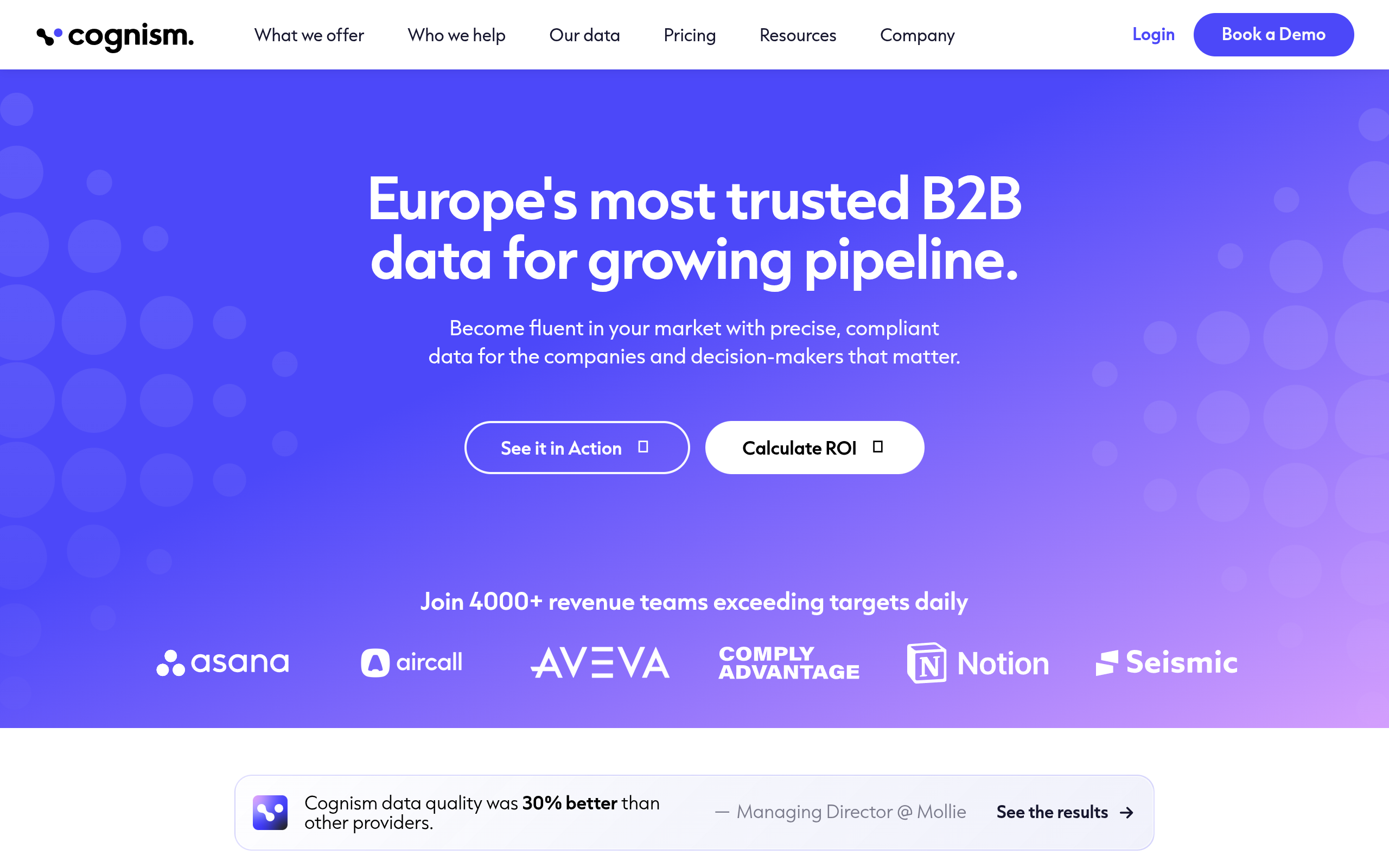
Cognism's homepage as of October 2026.
Cognism delivers globally compliant B2B intelligence, specializing in human-verified mobile numbers and strict international privacy governance. It helps outbound calling teams reach senior enterprise buyers while maintaining regulatory compliance across Europe.
The platform screens records against international Do Not Call registries and maintains high direct-dial accuracy. However, its pricing model requires annual enterprise commitments that generally exceed the practical budgets of early-stage teams.
Best for: Mid-market and enterprise sales teams running aggressive cold-calling campaigns across European markets.
Clay
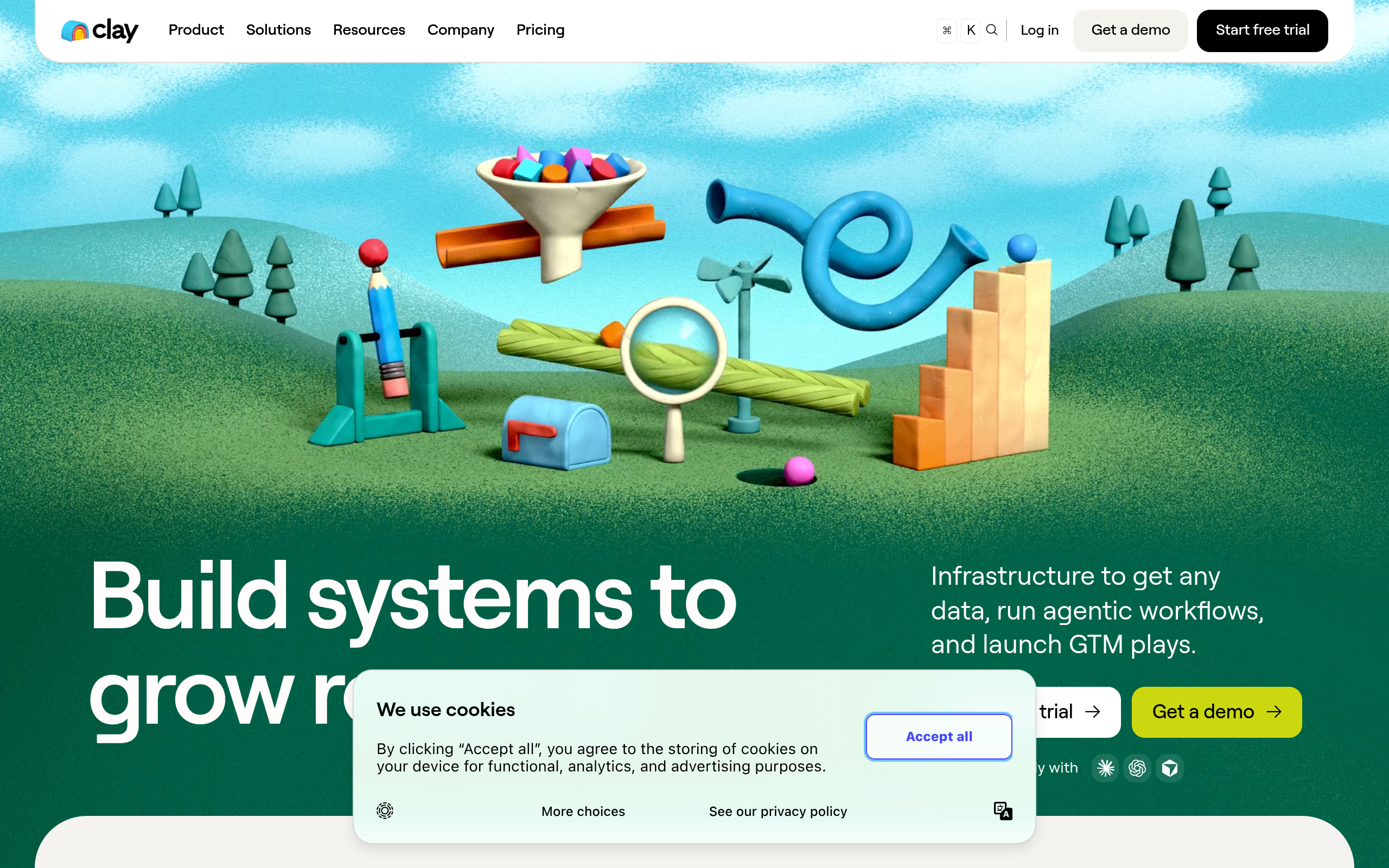
Clay's homepage as of October 2026.
Clay works as a data platform that queries dozens of external providers through a spreadsheet interface. That setup allows technical revenue teams to build custom waterfall enrichment workflows instead of relying on one database.
The system connects to existing CRMs and includes automated research assistants for prospect intelligence. But there is a tradeoff. Non-technical reps face a steep learning curve, and credit costs can multiply quickly during multi-step lookups.
Best for: Revenue operations specialists and growth engineers building programmatic, highly customized outbound enrichment flows.
A Simpler Alternative for Quality B2B Data
Access targeted B2B contact records from Go4Database without locked contracts or complicated credit tiers.
Go4Database
Established in 2012, Go4Database provides direct contact ownership through downloadable email and phone files. Replacing seat licenses with static files eliminates credit expirations for teams reviewing B2B database providers.
According to Go4Database's site recently, it lists roughly 400 million business contacts and 130 million verified mobile numbers. Filtering covers specific audiences, including a US startups mailing list and a marketing decision maker list.
On Go4Database's site recently, tiers range from Nano at $35 monthly (1,500 contacts) to Micro Active at $59 monthly (3,000 contacts across 10 users). Both options include a 30-day money-back guarantee.
There is a clear tradeoff. Go4Database focuses strictly on data delivery rather than providing native email sequencers.
Best for: Founders, agencies, and lean sales teams seeking clean, downloadable prospect data without recurring credit expiration rules.
Frequently Asked Questions
You might have these questions in your mind?